


12 Feb 2026
Publish Date
Monday 29 December 2025 - 10:45


recommended
0
National Alignment for the Future of Afghanistan
The New Coalition of "National Alignment for the Future of Afghanistan": Opportunities and Challenges
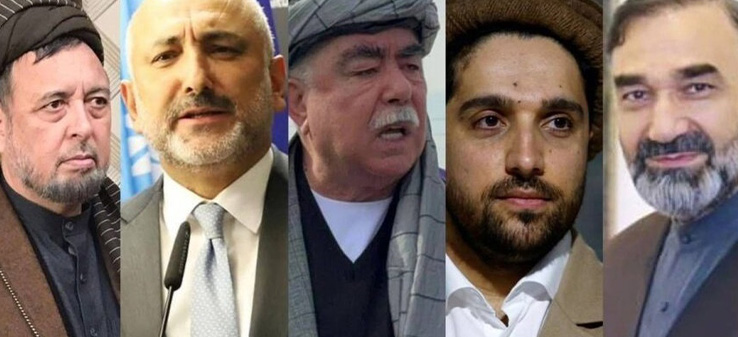
Three political currents opposed to the Taliban government — namely the High Council of the National Resistance for the Salvation of Afghanistan, the National Assembly for the Salvation of Afghanistan, and the National Movement for Peace and Justice — announced the establishment of a new coalition called the “National Alignment for the Future of Afghanistan” during a virtual meeting. Senior officials of the former political system and political leaders opposed to the Taliban, including Abdul Rashid Dostum, Atta Mohammad Noor, Mohammad Mohaqiq, Ahmad Massoud, Hanif Atmar, Omar Daudzai, Mohammad Yunus Qanooni, Mohammad Ismail Khan, Sarwar Danish, Tadin Khan, as well as a number of other officials and political figures from the former government, participated in this meeting.
Abdul Rahim Kamel
13 minutes reading
Abdul Rahim Kamel is an Afghan Analyst.
13 minutes reading
On Tuesday, 9 December 2025, three political currents opposed to the Taliban government — namely the High Council of the National Resistance for the Salvation of Afghanistan, the National Assembly for the Salvation of Afghanistan, and the National Movement for Peace and Justice — announced the establishment of a new coalition called the “National Alignment Coalition for the Future of Afghanistan” during a virtual meeting.
Senior officials of the former political system and political leaders opposed to the Taliban, including Abdul Rashid Dostum, Atta Mohammad Noor, Mohammad Mohaqiq, Ahmad Massoud, Hanif Atmar, Omar Daudzai, Mohammad Yunus Qanooni, Mohammad Ismail Khan, Sarwar Danish, Tadin Khan, and a number of other officials and political figures from the former government, attended this meeting.
By issuing a joint statement, the National Alignment Coalition for the Future of Afghanistan presented a unified vision for achieving “sustainable peace and overcoming the current crisis in Afghanistan.” The groups participating in this coalition also invited the Taliban government to join this framework in order to “achieve sustainable peace and establish a legitimate system within the framework of national Islamic principles and culture.”
This article examines the approach, opportunities, and challenges of this newly established coalition.
The Political Approach of the National Alignment Coalition
Apparently, the National Alignment Coalition has been formed as a political movement opposed to the Taliban government with a negotiation-oriented approach based on peaceful solutions. It appears that political leaders opposed to the Taliban, adopting a new approach, have come to believe that the current crisis in Afghanistan must be managed through political and legal means, and are now emphasizing the avoidance of military options. The leaders of this new political coalition have likely concluded that sustainable peace can only be achieved through inclusive intra-Afghan negotiations and intelligent engagement with regional actors and the international community.
The new approach adopted by the political leaders within the coalition’s structure indicates that, contrary to their approach in past years and unlike the military fronts opposed to the Taliban, they intend to replace military confrontation with a political path and compensate for their limited field capabilities by focusing on diplomatic tools and political pressure.
Such an approach is also assessed as logical within the framework of Afghanistan’s current realities, as the failure of military solutions and the lack of field capacity to confront the Taliban government have made the necessity of focusing on peaceful and pragmatic methods more evident.
The Demands and Plan Presented by the National Alignment Coalition
According to the joint statement, the main demands of the National Alignment Coalition include the following:
-Holding inclusive intra-Afghan negotiations with the support of the United Nations and regional countries aimed at establishing a legitimate and inclusive government based on national Islamic principles,
-Full observance of human rights, especially women’s rights,
-and the active participation of the opposition in reforming and redesigning Afghanistan’s power structure.
These objectives reflect the coalition’s effort to present itself as a legitimate political actor and to exert political pressure on the Taliban government. Strategically, those advancing these demands seek to strengthen the possibility of dialogue and political engagement between opposition factions and the Taliban government and to steer Afghanistan’s political environment toward accepting peaceful options.
The coalition’s plan to achieve peace and form an inclusive government is defined in two stages. The first stage focuses on discourse-building and strengthening mutual acceptance among opposition movements as well as inviting the Taliban to participate in political negotiations. The second stage involves the implementation of practical political programs, such as the development of specific plans for social participation, the restoration of public trust, and the creation of inclusive and national political institutions.
This plan has been designed with the aim of restoring the social and political influence of leaders and creating a pragmatic path for political participation in Afghanistan. It demonstrates the National Alignment Coalition’s focus on actionable solutions for achieving sustainable peace and an inclusive government in Afghanistan.
Opportunities of the National Alignment Coalition
The opportunities available to the National Alignment Coalition can be examined at three levels: domestic, regional, and international.
At the domestic level, factors such as the failure of Taliban opponents to achieve any significant military success over the past four years, the exhaustion of the Afghan people from war and bloodshed, the public’s lack of enthusiasm for the military plans and thinking of exiled commanders, and society’s need for peace all provide a favorable context for promoting dialogue and a negotiation-oriented approach. Traditionally, some opposition leaders possess social and religious influence among the population. Therefore, if the Taliban government welcomes negotiation, this influence could provide the basis for public mobilization or consensus-building.
At the regional level, the role of neighboring and regional countries-- particularly Iran, Turkey, and Qatar -- in facilitating negotiations and exerting political and diplomatic pressure on the Taliban government is of great importance. By drawing on the experience of previous negotiations, these countries can create opportunities for shaping a meaningful dialogue between the Taliban government and the opposition and strengthen the path of diplomacy and negotiation.
Developments in Afghanistan indicate that Taliban opponents might have turned to a military option due to tensions between Pakistan and the Taliban government. but now, due to the lack of regional support for any internal conflict and the unwillingness of regional countries to see the collapse of the new order in Afghanistan, leaders opposed to the Taliban government have accepted regional realities and chosen the political and negotiation path as the primary option. This rational approach provides new opportunities for the coalition to play a constructive role.
At the international level, the UN support for creating a suitable platform to initiate intra-Afghan negotiations seems plausible and possible. The UN pursued this initiative in the Doha format, but it failed due to the lack of inclusivity and the disregard for regional participation.
Challenges of the National Alignment Coalition
At the intra-organizational level, one of the most important limitations of this coalition is its excessive focus on leaders and political figures—figures who are often accused of inefficiency in the former system and who, in one way or another, benefited from and were stakeholders in the previous order. The departure of these figures from Afghanistan as well as their economic investments and residence in foreign countries, including Turkey, under the current difficult circumstances, have led public opinion in Afghanistan to subject most of these leaders to serious criticism. This public perception hinders the formation of a stable and strong relationship between the people and—at least part of—the leadership, and in itself constitutes a challenge to the coalition’s role and position within society.
On the other hand, Afghan citizens who are living inside the country under severe economic conditions harbor deep resentment stemming from the history of foreign intervention and the current crisis resulting from it. The residence of leaders abroad or their ties with foreign governments intensifies this public frustration and aversion and, from a psychological perspective, creates a serious obstacle to the activities of political leaders and the newly established National Alignment Coalition.
Social and historical challenges also affect the coalition’s capacity. The unsuccessful experience of previous coalitions, social and ethnic divisions, and the limited presence and influence of the coalition in the real political and social arena are constraints that any new political initiative— like those in the past— is likely to face. Afghanistan’s political history shows that a lack of public trust as well as doubts about the durability of coalitions prevent the realization of long-term goals and broad societal participation.
The reaction of the Taliban government is also considered one of the serious constraints facing the coalition. By restricting the activities of political parties and organizations and banning the operation of independent groups, the Taliban reduce the possibility of the coalition’s active presence in the domestic political arena. In addition, the Taliban government’s reluctance to accept structural change and its use of violence as a tool to control political equations pose a threat to the achievement of the coalition’s objectives. These limitations increase the necessity of relying on diplomatic approaches, political pressure, and intelligent engagement with regional and international actors.
Overall, the challenges facing the National Alignment Coalition include intra-organizational limitations and leader-centricity, factional and ethnic divisions, dependence on external support, the historical experience of failed coalitions, limited social and political influence, and the restrictive response of the Taliban government. This set of challenges indicates that any planning for the coalition’s sustainability and effectiveness must, alongside a focus on internal institution-building, also take into account practical strategies for engaging with regional and international conditions and managing social trust and domestic legitimacy.
Requirements for the Success and Sustainability of the National Alignment Coalition
In order to increase the chances of success and sustainability of the National Alignment Coalition and to facilitate the formation of an intra-Afghan dialogue with the aim of establishing an inclusive government in Afghanistan, the following requirements must be taken into consideration.
First, the National Alignment Coalition must abandon individualism, partyism, and factionism, and by building public trust, place national interests at the forefront of its priorities and dialogue. Otherwise, it is not unlikely that this new coalition will suffer the same fate as previous political coalitions and collapse. Even if an intra-Afghan dialogue process materializes under the auspices of the United Nations Security Council and regional countries, the same conditions of factionalism, lack of shared interests, and absence of a national approach witnessed at the 2001 Bonn Conference may be repeated.
Second, reliance on national interests and avoiding involvement in the field-based power games of foreign countries will strengthen the authority, legitimacy, and role of the coalition in Afghanistan’s developments. Preserving independence in decision-making and avoiding becoming a tool for advancing the objectives of foreign states will enhance domestic legitimacy and reduce the likelihood of the coalition being labeled a “foreign project.” This strategic independence will also enable the coalition to benefit from regional opportunities while pursuing its political path without external pressure.
Third, focusing on genuine negotiations and practical solutions is another essential requirement. The coalition must develop clear, time-bound, and implementable plans for achieving peace and establishing an inclusive government. These plans may include mechanisms for social participation, rebuilding public trust, establishing inclusive political institutions, and defining a clear path for opposition participation in reforming the Taliban government’s political structure. Practical, results-oriented action will protect the coalition from becoming too sloganeering and ineffective, and increase its chances of exerting real influence on the domestic political process.
Fourth, the intelligent use of regional capacities is also part of the coalition’s strategy for success. In this context, neighboring countries and regional actors can play the role of mediators and facilitators of intra-Afghan negotiations. Therefore, there is a serious need for the coalition to align itself with the regional order, because managing engagement with regional capacities— in a way that preserves the National Alignment Coalition’s practical and political independence— is the key to creating effective political pressure on the Taliban government and opening the path to meaningful dialogue.
Fifth, and most importantly, the Taliban government must seize this opportunity and pay attention to the instructive lessons of Afghanistan’s past: namely, that the cost of peace and dialogue is always lower than the cost of war and conflict. The historical mistake of past governments—and one of the reasons for the collapse of political systems in Afghanistan—has been that ruling authorities did not agree to genuine and sincere dialogue with their opponents until defeat and collapse became fully tangible to them. They only adopted this approach when military opponents had expanded their operational reach to the vicinity of Kabul, at which point those opponents were no longer willing to negotiate and would settle for nothing less than full control of power and the state.
More importantly, in order to achieve national consensus and establish an inclusive government and a stable order in Afghanistan, the opposition must not become a tool of third-party foreign actors. the Taliban government must also provide an opportunity for inclusive national participation and thus not allow external actors to exploit the opposition card.
Conclusion
It appears that the National Alignment Coalition, with its negotiation-oriented and pragmatic approach, has created an exceptional opportunity to guide Afghanistan toward sustainable peace and an inclusive government. The intelligent use of domestic, regional, and international capacities, avoidance of individualism and factionalism, and a focus on practical solutions can transform this coalition into a credible and influential political actor. Afghanistan’s future depends on shared political will, responsible leadership by domestic actors, and the acceptance of active participation by society and regional stakeholders in order to pave the way for genuine dialogue and sustainable peace.
Senior officials of the former political system and political leaders opposed to the Taliban, including Abdul Rashid Dostum, Atta Mohammad Noor, Mohammad Mohaqiq, Ahmad Massoud, Hanif Atmar, Omar Daudzai, Mohammad Yunus Qanooni, Mohammad Ismail Khan, Sarwar Danish, Tadin Khan, and a number of other officials and political figures from the former government, attended this meeting.
By issuing a joint statement, the National Alignment Coalition for the Future of Afghanistan presented a unified vision for achieving “sustainable peace and overcoming the current crisis in Afghanistan.” The groups participating in this coalition also invited the Taliban government to join this framework in order to “achieve sustainable peace and establish a legitimate system within the framework of national Islamic principles and culture.”
This article examines the approach, opportunities, and challenges of this newly established coalition.
The Political Approach of the National Alignment Coalition
Apparently, the National Alignment Coalition has been formed as a political movement opposed to the Taliban government with a negotiation-oriented approach based on peaceful solutions. It appears that political leaders opposed to the Taliban, adopting a new approach, have come to believe that the current crisis in Afghanistan must be managed through political and legal means, and are now emphasizing the avoidance of military options. The leaders of this new political coalition have likely concluded that sustainable peace can only be achieved through inclusive intra-Afghan negotiations and intelligent engagement with regional actors and the international community.
The new approach adopted by the political leaders within the coalition’s structure indicates that, contrary to their approach in past years and unlike the military fronts opposed to the Taliban, they intend to replace military confrontation with a political path and compensate for their limited field capabilities by focusing on diplomatic tools and political pressure.
Such an approach is also assessed as logical within the framework of Afghanistan’s current realities, as the failure of military solutions and the lack of field capacity to confront the Taliban government have made the necessity of focusing on peaceful and pragmatic methods more evident.
The Demands and Plan Presented by the National Alignment Coalition
According to the joint statement, the main demands of the National Alignment Coalition include the following:
-Holding inclusive intra-Afghan negotiations with the support of the United Nations and regional countries aimed at establishing a legitimate and inclusive government based on national Islamic principles,
-Full observance of human rights, especially women’s rights,
-and the active participation of the opposition in reforming and redesigning Afghanistan’s power structure.
These objectives reflect the coalition’s effort to present itself as a legitimate political actor and to exert political pressure on the Taliban government. Strategically, those advancing these demands seek to strengthen the possibility of dialogue and political engagement between opposition factions and the Taliban government and to steer Afghanistan’s political environment toward accepting peaceful options.
The coalition’s plan to achieve peace and form an inclusive government is defined in two stages. The first stage focuses on discourse-building and strengthening mutual acceptance among opposition movements as well as inviting the Taliban to participate in political negotiations. The second stage involves the implementation of practical political programs, such as the development of specific plans for social participation, the restoration of public trust, and the creation of inclusive and national political institutions.
This plan has been designed with the aim of restoring the social and political influence of leaders and creating a pragmatic path for political participation in Afghanistan. It demonstrates the National Alignment Coalition’s focus on actionable solutions for achieving sustainable peace and an inclusive government in Afghanistan.
Opportunities of the National Alignment Coalition
The opportunities available to the National Alignment Coalition can be examined at three levels: domestic, regional, and international.
At the domestic level, factors such as the failure of Taliban opponents to achieve any significant military success over the past four years, the exhaustion of the Afghan people from war and bloodshed, the public’s lack of enthusiasm for the military plans and thinking of exiled commanders, and society’s need for peace all provide a favorable context for promoting dialogue and a negotiation-oriented approach. Traditionally, some opposition leaders possess social and religious influence among the population. Therefore, if the Taliban government welcomes negotiation, this influence could provide the basis for public mobilization or consensus-building.
At the regional level, the role of neighboring and regional countries-- particularly Iran, Turkey, and Qatar -- in facilitating negotiations and exerting political and diplomatic pressure on the Taliban government is of great importance. By drawing on the experience of previous negotiations, these countries can create opportunities for shaping a meaningful dialogue between the Taliban government and the opposition and strengthen the path of diplomacy and negotiation.
Developments in Afghanistan indicate that Taliban opponents might have turned to a military option due to tensions between Pakistan and the Taliban government. but now, due to the lack of regional support for any internal conflict and the unwillingness of regional countries to see the collapse of the new order in Afghanistan, leaders opposed to the Taliban government have accepted regional realities and chosen the political and negotiation path as the primary option. This rational approach provides new opportunities for the coalition to play a constructive role.
At the international level, the UN support for creating a suitable platform to initiate intra-Afghan negotiations seems plausible and possible. The UN pursued this initiative in the Doha format, but it failed due to the lack of inclusivity and the disregard for regional participation.
Challenges of the National Alignment Coalition
At the intra-organizational level, one of the most important limitations of this coalition is its excessive focus on leaders and political figures—figures who are often accused of inefficiency in the former system and who, in one way or another, benefited from and were stakeholders in the previous order. The departure of these figures from Afghanistan as well as their economic investments and residence in foreign countries, including Turkey, under the current difficult circumstances, have led public opinion in Afghanistan to subject most of these leaders to serious criticism. This public perception hinders the formation of a stable and strong relationship between the people and—at least part of—the leadership, and in itself constitutes a challenge to the coalition’s role and position within society.
On the other hand, Afghan citizens who are living inside the country under severe economic conditions harbor deep resentment stemming from the history of foreign intervention and the current crisis resulting from it. The residence of leaders abroad or their ties with foreign governments intensifies this public frustration and aversion and, from a psychological perspective, creates a serious obstacle to the activities of political leaders and the newly established National Alignment Coalition.
Social and historical challenges also affect the coalition’s capacity. The unsuccessful experience of previous coalitions, social and ethnic divisions, and the limited presence and influence of the coalition in the real political and social arena are constraints that any new political initiative— like those in the past— is likely to face. Afghanistan’s political history shows that a lack of public trust as well as doubts about the durability of coalitions prevent the realization of long-term goals and broad societal participation.
The reaction of the Taliban government is also considered one of the serious constraints facing the coalition. By restricting the activities of political parties and organizations and banning the operation of independent groups, the Taliban reduce the possibility of the coalition’s active presence in the domestic political arena. In addition, the Taliban government’s reluctance to accept structural change and its use of violence as a tool to control political equations pose a threat to the achievement of the coalition’s objectives. These limitations increase the necessity of relying on diplomatic approaches, political pressure, and intelligent engagement with regional and international actors.
Overall, the challenges facing the National Alignment Coalition include intra-organizational limitations and leader-centricity, factional and ethnic divisions, dependence on external support, the historical experience of failed coalitions, limited social and political influence, and the restrictive response of the Taliban government. This set of challenges indicates that any planning for the coalition’s sustainability and effectiveness must, alongside a focus on internal institution-building, also take into account practical strategies for engaging with regional and international conditions and managing social trust and domestic legitimacy.
Requirements for the Success and Sustainability of the National Alignment Coalition
In order to increase the chances of success and sustainability of the National Alignment Coalition and to facilitate the formation of an intra-Afghan dialogue with the aim of establishing an inclusive government in Afghanistan, the following requirements must be taken into consideration.
First, the National Alignment Coalition must abandon individualism, partyism, and factionism, and by building public trust, place national interests at the forefront of its priorities and dialogue. Otherwise, it is not unlikely that this new coalition will suffer the same fate as previous political coalitions and collapse. Even if an intra-Afghan dialogue process materializes under the auspices of the United Nations Security Council and regional countries, the same conditions of factionalism, lack of shared interests, and absence of a national approach witnessed at the 2001 Bonn Conference may be repeated.
Second, reliance on national interests and avoiding involvement in the field-based power games of foreign countries will strengthen the authority, legitimacy, and role of the coalition in Afghanistan’s developments. Preserving independence in decision-making and avoiding becoming a tool for advancing the objectives of foreign states will enhance domestic legitimacy and reduce the likelihood of the coalition being labeled a “foreign project.” This strategic independence will also enable the coalition to benefit from regional opportunities while pursuing its political path without external pressure.
Third, focusing on genuine negotiations and practical solutions is another essential requirement. The coalition must develop clear, time-bound, and implementable plans for achieving peace and establishing an inclusive government. These plans may include mechanisms for social participation, rebuilding public trust, establishing inclusive political institutions, and defining a clear path for opposition participation in reforming the Taliban government’s political structure. Practical, results-oriented action will protect the coalition from becoming too sloganeering and ineffective, and increase its chances of exerting real influence on the domestic political process.
Fourth, the intelligent use of regional capacities is also part of the coalition’s strategy for success. In this context, neighboring countries and regional actors can play the role of mediators and facilitators of intra-Afghan negotiations. Therefore, there is a serious need for the coalition to align itself with the regional order, because managing engagement with regional capacities— in a way that preserves the National Alignment Coalition’s practical and political independence— is the key to creating effective political pressure on the Taliban government and opening the path to meaningful dialogue.
Fifth, and most importantly, the Taliban government must seize this opportunity and pay attention to the instructive lessons of Afghanistan’s past: namely, that the cost of peace and dialogue is always lower than the cost of war and conflict. The historical mistake of past governments—and one of the reasons for the collapse of political systems in Afghanistan—has been that ruling authorities did not agree to genuine and sincere dialogue with their opponents until defeat and collapse became fully tangible to them. They only adopted this approach when military opponents had expanded their operational reach to the vicinity of Kabul, at which point those opponents were no longer willing to negotiate and would settle for nothing less than full control of power and the state.
More importantly, in order to achieve national consensus and establish an inclusive government and a stable order in Afghanistan, the opposition must not become a tool of third-party foreign actors. the Taliban government must also provide an opportunity for inclusive national participation and thus not allow external actors to exploit the opposition card.
Conclusion
It appears that the National Alignment Coalition, with its negotiation-oriented and pragmatic approach, has created an exceptional opportunity to guide Afghanistan toward sustainable peace and an inclusive government. The intelligent use of domestic, regional, and international capacities, avoidance of individualism and factionalism, and a focus on practical solutions can transform this coalition into a credible and influential political actor. Afghanistan’s future depends on shared political will, responsible leadership by domestic actors, and the acceptance of active participation by society and regional stakeholders in order to pave the way for genuine dialogue and sustainable peace.
Abdul Rahim Kamel is an Afghan Analyst.
News code:4219