


22 Sep 2026
Publish Date
Friday 7 August 2026 - 12:24


recommended
0
Iran-China Transit Connection
The potential of Iran-China Transit Connection Through Afghanistan
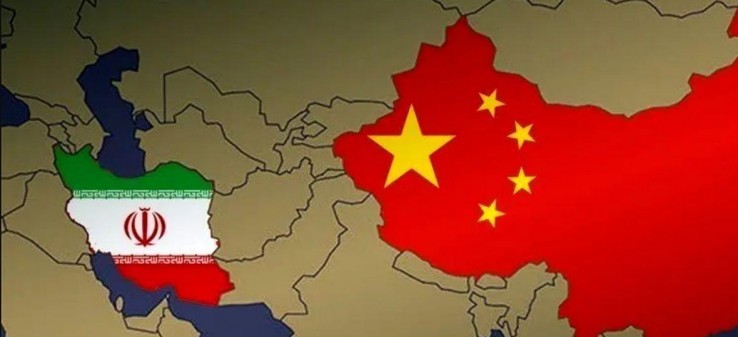
Given the importance of overland connectivity between Iran and China, Afghanistan has emerged as one of the potential land routes. On the other hand, the closure of the Strait of Hormuz and the disruption of maritime trade have further highlighted Afghanistan’s role, positioning the country as one of the connecting links in the overland and rail trade between Tehran and Beijing. Connecting Iran to China through Afghanistan is also consistent with Afghanistan’s broader strategic objectives.
By: Tawhid Varastan
What You Read in This Report:
1. Introduction
2. China–Central Asia–Afghanistan Railway Routes
3. The Strategic Importance of the Herat–Mazar-e Sharif–China Railway
4. Conclusion
What You Read in This Report:
1. Introduction
2. China–Central Asia–Afghanistan Railway Routes
3. The Strategic Importance of the Herat–Mazar-e Sharif–China Railway
4. Conclusion
Introduction
In recent years, and with the accelerating transition from a unipolar world order to a new multipolar order, competition for control over trade and energy routes as future sources of geopolitical and geoeconomic power has intensified. This trend can easily be traced in the grand strategies of the United States, China, Russia, the European Union, and other major and even middle powers.
Following its failure to achieve its strategic objectives in the Ramadan War (the recent U.S.- Zionist Regime war against Iran), the United States has turned to the blockade of Iranian ports in an effort to pressure Iran and disrupt its maritime trade, which constitutes a significant component of the Iranian economy. This has particularly affected trade between Iran and China. Consequently, one option could be for Tehran and Beijing to turn toward rail transportation through Afghanistan, where infrastructure has been developed to some extent in recent years.
Given that Afghanistan is geographically situated between Iran to its west and China to its east, it is natural to consider that, alongside Central Asian routes, Afghanistan could serve as one of the complementary corridors for trade with China. Trade with China through Afghanistan can create new commercial routes and provide strategic advantages to both countries within a complex geopolitical environment. In fact, the China–Afghanistan–Iran route can be viewed as more than a transportation line; it is a corridor capable of transforming the logistical landscape of Iran and the broader region. This paper examines the capacities and prospects of this issue.
China–Central Asia–Afghanistan Railway Routes
According to available estimates, Afghanistan’s railway routes connecting China and Iran are more cost-effective and time-efficient than routes passing through Central Asia. At present, however, following the launch of the major Belt and Road Initiative (BRI), which seeks to build economic networks and expand China’s influence, Afghanistan has been connected to China through Central Asian countries, thereby increasing the importance of both Central Asia and Afghanistan in Beijing’s regional connectivity projects.
One of the established routes is the East China–Kazakhstan–Uzbekistan–Hairatan corridor. In 2016, the first freight train from China traveled along this route and arrived in Afghanistan. This railway line begins in Nantong, Jiangsu Province, in eastern China and reaches Hairatan on the Uzbekistan–Afghanistan border through Kazakhstan and Uzbekistan. Cargo transportation along this route takes approximately two weeks, and the inauguration of this rail link attracted significant attention from major traders.
This railway route opened the way for a substantial increase in bilateral trade between China and Afghanistan. However, the lack of continuous freight traffic indicates that the route has not yet achieved sufficient economic viability, as it has mainly been used to meet the needs of Afghanistan’s northern provinces. Given the current circumstances facing Iran, this railway route could be revived and become one of the channels for Iran–China trade through Afghanistan.
Another route is the China–Kazakhstan–Uzbekistan–Turkmenistan–Herat corridor. This is a newly established transit corridor. Transporting cargo along this 7,400-kilometer route takes approximately 30 days. Cargo is loaded in China and, after passing through the Altynkol station in Kazakhstan, traverses Uzbekistan before reaching the Bukhara logistics center operated by Uztemiryulkonteyner Company. At this stage, containers are transferred by road transport. Subsequently, shipments are transported through Turkmenistan to the city of Herat in Afghanistan. Turkmenistan has shown considerable interest in this new route. Its advantage for Iran lies in the fact that, instead of relying on the Mazar-e Sharif–Herat road corridor, cargo is transported through Turkmenistan, whose road infrastructure is superior to that of Afghanistan. Once goods reach Herat, they can be transported into Iran more quickly and at lower cost via the Khaf–Herat railway line.
Another route begins in central China and, after passing through Kazakhstan and Uzbekistan, reaches the dry port of Hairatan. A Chinese railway logistics company, China Railway Container Transport Co., Ltd., has launched this new railway route from central China to Afghanistan. The company transported 55 cargo containers from Chongqing in central China through Kazakhstan and Uzbekistan to Hairatan. This marks the first time that a Chinese transport company has used this origin point and committed itself to maintaining the route’s operation. Total transit time along this rail corridor has been estimated at between 12 and 15 days.
The Strategic Importance of the Herat–Mazar-e Sharif–China Railway
To advance trade among China, Afghanistan, and Iran, the Herat–Khaf railway, as a key component of Afghanistan’s connectivity initiatives, holds special significance. This project connects the city of Herat in western Afghanistan to Khaf in eastern Iran and has designed to facilitate trade between Afghanistan and regional countries. It is expected to generate positive long-term economic effects.
In 2023, the Afghan government signed a $53 million contract for the completion of the remaining section of the railway line. The project is progressing at a reasonable pace, and upon completion, the important city of Herat will be connected to Iran’s railway network. The Afghan government has also shown special interest in constructing the Herat–Mazar-e Sharif railway and has conducted negotiations with various countries, including Iran and Uzbekistan. Although no agreement has yet been reached, there is a possibility that Uzbekistan may participate in the construction of this railway project. Nevertheless, Uzbekistan’s primary priority remains the Trans-Afghan Railway.
In recent years, one of the projects that has attracted the interest of Iranian officials has been the extension of the Khaf–Herat railway to Mazar-e Sharif and subsequently to China. Recent regional developments and the maritime blockade of Iran have further highlighted the necessity of this project. However, China has numerous reservations regarding direct connectivity with Afghanistan and has so far not approved any rail or road project linking China to Afghanistan through the Wakhan Corridor. Even if Beijing ultimately accepts direct rail or road connectivity with Afghanistan, the realization of such a project would require a five-year period.
Conclusion
Given the importance of overland connectivity between Iran and China, Afghanistan has emerged as one of the potential land routes. Furthermore, the closure of the Strait of Hormuz and the disruption of maritime trade have increased Afghanistan’s significance, positioning it as one of the connecting links in overland and rail trade between Tehran and Beijing. Connecting Iran to China through Afghanistan is also aligned with Afghanistan’s broader strategic objectives.
The Taliban government’s current approach is to transform Afghanistan into a regional trade hub and generate foreign exchange revenues through transit activities, an objective that is naturally compatible with the establishment of such a corridor. Therefore, this trilateral cooperation can be viewed as a win-win arrangement for all parties, bringing significant geoeconomic and geopolitical benefits.
At the same time, serious obstacles remain, particularly in the areas of infrastructure and security within Afghanistan. However, cooperation among the three countries could help overcome these challenges. One of the most notable achievements of such cooperation could be the completion of the Herat–Mazar-e Sharif railway line and, subsequently, the Wakhan Corridor.
Tawhid Varastan is an expert in Economic Affairs.
In recent years, and with the accelerating transition from a unipolar world order to a new multipolar order, competition for control over trade and energy routes as future sources of geopolitical and geoeconomic power has intensified. This trend can easily be traced in the grand strategies of the United States, China, Russia, the European Union, and other major and even middle powers.
Following its failure to achieve its strategic objectives in the Ramadan War (the recent U.S.- Zionist Regime war against Iran), the United States has turned to the blockade of Iranian ports in an effort to pressure Iran and disrupt its maritime trade, which constitutes a significant component of the Iranian economy. This has particularly affected trade between Iran and China. Consequently, one option could be for Tehran and Beijing to turn toward rail transportation through Afghanistan, where infrastructure has been developed to some extent in recent years.
Given that Afghanistan is geographically situated between Iran to its west and China to its east, it is natural to consider that, alongside Central Asian routes, Afghanistan could serve as one of the complementary corridors for trade with China. Trade with China through Afghanistan can create new commercial routes and provide strategic advantages to both countries within a complex geopolitical environment. In fact, the China–Afghanistan–Iran route can be viewed as more than a transportation line; it is a corridor capable of transforming the logistical landscape of Iran and the broader region. This paper examines the capacities and prospects of this issue.
China–Central Asia–Afghanistan Railway Routes
According to available estimates, Afghanistan’s railway routes connecting China and Iran are more cost-effective and time-efficient than routes passing through Central Asia. At present, however, following the launch of the major Belt and Road Initiative (BRI), which seeks to build economic networks and expand China’s influence, Afghanistan has been connected to China through Central Asian countries, thereby increasing the importance of both Central Asia and Afghanistan in Beijing’s regional connectivity projects.
One of the established routes is the East China–Kazakhstan–Uzbekistan–Hairatan corridor. In 2016, the first freight train from China traveled along this route and arrived in Afghanistan. This railway line begins in Nantong, Jiangsu Province, in eastern China and reaches Hairatan on the Uzbekistan–Afghanistan border through Kazakhstan and Uzbekistan. Cargo transportation along this route takes approximately two weeks, and the inauguration of this rail link attracted significant attention from major traders.
This railway route opened the way for a substantial increase in bilateral trade between China and Afghanistan. However, the lack of continuous freight traffic indicates that the route has not yet achieved sufficient economic viability, as it has mainly been used to meet the needs of Afghanistan’s northern provinces. Given the current circumstances facing Iran, this railway route could be revived and become one of the channels for Iran–China trade through Afghanistan.
Another route is the China–Kazakhstan–Uzbekistan–Turkmenistan–Herat corridor. This is a newly established transit corridor. Transporting cargo along this 7,400-kilometer route takes approximately 30 days. Cargo is loaded in China and, after passing through the Altynkol station in Kazakhstan, traverses Uzbekistan before reaching the Bukhara logistics center operated by Uztemiryulkonteyner Company. At this stage, containers are transferred by road transport. Subsequently, shipments are transported through Turkmenistan to the city of Herat in Afghanistan. Turkmenistan has shown considerable interest in this new route. Its advantage for Iran lies in the fact that, instead of relying on the Mazar-e Sharif–Herat road corridor, cargo is transported through Turkmenistan, whose road infrastructure is superior to that of Afghanistan. Once goods reach Herat, they can be transported into Iran more quickly and at lower cost via the Khaf–Herat railway line.
Another route begins in central China and, after passing through Kazakhstan and Uzbekistan, reaches the dry port of Hairatan. A Chinese railway logistics company, China Railway Container Transport Co., Ltd., has launched this new railway route from central China to Afghanistan. The company transported 55 cargo containers from Chongqing in central China through Kazakhstan and Uzbekistan to Hairatan. This marks the first time that a Chinese transport company has used this origin point and committed itself to maintaining the route’s operation. Total transit time along this rail corridor has been estimated at between 12 and 15 days.
The Strategic Importance of the Herat–Mazar-e Sharif–China Railway
To advance trade among China, Afghanistan, and Iran, the Herat–Khaf railway, as a key component of Afghanistan’s connectivity initiatives, holds special significance. This project connects the city of Herat in western Afghanistan to Khaf in eastern Iran and has designed to facilitate trade between Afghanistan and regional countries. It is expected to generate positive long-term economic effects.
In 2023, the Afghan government signed a $53 million contract for the completion of the remaining section of the railway line. The project is progressing at a reasonable pace, and upon completion, the important city of Herat will be connected to Iran’s railway network. The Afghan government has also shown special interest in constructing the Herat–Mazar-e Sharif railway and has conducted negotiations with various countries, including Iran and Uzbekistan. Although no agreement has yet been reached, there is a possibility that Uzbekistan may participate in the construction of this railway project. Nevertheless, Uzbekistan’s primary priority remains the Trans-Afghan Railway.
In recent years, one of the projects that has attracted the interest of Iranian officials has been the extension of the Khaf–Herat railway to Mazar-e Sharif and subsequently to China. Recent regional developments and the maritime blockade of Iran have further highlighted the necessity of this project. However, China has numerous reservations regarding direct connectivity with Afghanistan and has so far not approved any rail or road project linking China to Afghanistan through the Wakhan Corridor. Even if Beijing ultimately accepts direct rail or road connectivity with Afghanistan, the realization of such a project would require a five-year period.
Conclusion
Given the importance of overland connectivity between Iran and China, Afghanistan has emerged as one of the potential land routes. Furthermore, the closure of the Strait of Hormuz and the disruption of maritime trade have increased Afghanistan’s significance, positioning it as one of the connecting links in overland and rail trade between Tehran and Beijing. Connecting Iran to China through Afghanistan is also aligned with Afghanistan’s broader strategic objectives.
The Taliban government’s current approach is to transform Afghanistan into a regional trade hub and generate foreign exchange revenues through transit activities, an objective that is naturally compatible with the establishment of such a corridor. Therefore, this trilateral cooperation can be viewed as a win-win arrangement for all parties, bringing significant geoeconomic and geopolitical benefits.
At the same time, serious obstacles remain, particularly in the areas of infrastructure and security within Afghanistan. However, cooperation among the three countries could help overcome these challenges. One of the most notable achievements of such cooperation could be the completion of the Herat–Mazar-e Sharif railway line and, subsequently, the Wakhan Corridor.
News code:4347