


5 Oct 2026
Publish Date
Sunday 16 August 2026 - 15:00


recommended
0
Returnees from Iran on Afghanistan’s Shiite
The Impact of Returnees from Iran on Afghanistan’s Shiite Community
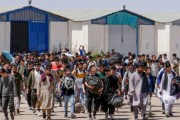
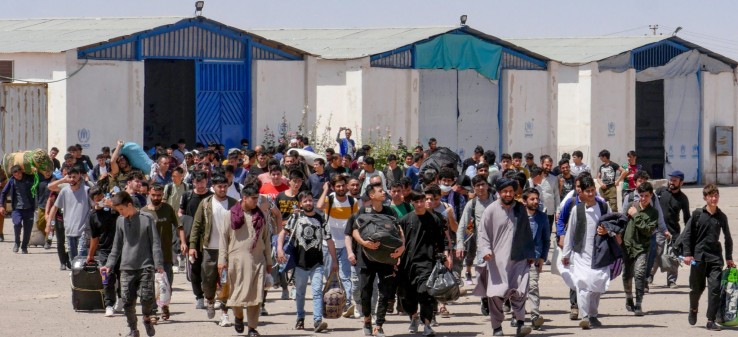
The return of Afghan migrants from Iran has become one of the most significant demographic and social developments in Afghanistan in recent years. According to United Nations reports, approximately 2.9 million Afghans returned to Afghanistan in 2025, while more than 600,000 returned during the first four months of 2026, and this trend is expected to continue (UN, 2026). A substantial proportion of these returnees consists of migrants who spent many years living in Iran and were exposed to the country's educational system, cultural environment, labor market, religious institutions, and social networks.
By: Najmeh Jami
What You Read in This report:
1.Introduction
2.Cultural, Religious, and Identity Impacts
3.Social Impacts
4.Conclusion
What You Read in This report:
1.Introduction
2.Cultural, Religious, and Identity Impacts
3.Social Impacts
4.Conclusion
Introduction
The return of Afghan migrants from Iran has become one of the most significant demographic and social transformations in Afghanistan in recent years. According to United Nations reports, approximately 2.9 million people returned to Afghanistan in 2025, while more than 600,000 returned during the first four months of 2026, and this trend is expected to continue (UN, 2026). A substantial proportion of these returnees consists of migrants who spent many years living in Iran and were exposed to the country's educational system, cultural environment, labor market, religious institutions, and social networks. Among them, Afghanistan's Shiite community has constituted one of the largest groups of Afghan migrants in Iran. The large-scale presence of Shiite migrants in Iran has been shaped not only by their linguistic and religious affinities with the country but also by the historical experience of marginalization, discrimination, and social exclusion that this community has faced in Afghanistan.
For this reason, the large-scale return of these migrants has the potential to play a significant role in redefining the social, cultural, and identity-based position of Afghanistan's Shiite population. Their return should therefore not be viewed merely as a demographic movement or a transfer of labor, but rather as a broader social and cultural process. Nevertheless, the type and magnitude of the capital carried by these migrants are multilayered and heterogeneous, depending on factors such as social status, educational attainment, occupational background, and migration experience. Consequently, the patterns through which they influence Afghan society are also diverse. For example, labor migrants primarily transfer technical skills, job experiences, new ways of working, and communication networks to their communities of origin, whereas university graduates, religious scholars, economic activists, and business owners bring different forms of cultural, religious, and economic capital.
Cultural, Religious, and Identity Impacts
Afghan migrants returning from Iran bring with them a wide range of cultural, religious, and identity-related capital acquired through years of living in the host society. Following their return, these forms of capital are reproduced within Afghanistan's social landscape and exert a significant influence on the country's cultural and identity formation.
One of the most important consequences of this process is the introduction of new cultural and educational patterns, particularly in Shiite-populated regions of Afghanistan. Many returnees have developed more positive attitudes toward education, vocational training, and higher education, especially girls' education, and have brought it with them to Afghanistan. This has contributed to increased demand for formal and informal education, private tutoring, language instruction, and vocational training courses. Furthermore, their familiarity with Iran's media and cultural environment has expanded the consumption of Persian-language media, increased access to educational resources, and strengthened transnational cultural ties among Afghanistan's Shiite population. As a result, they frequently employ vocabulary, expressions, and linguistic patterns influenced by the Persian language as spoken in Iran in their everyday conversations. Moreover, through the transfer of job skills, urban experiences, and transnational social networks, returnees play a significant role in reproducing and expanding the community's cultural capital, potentially encouraging segments of Afghanistan's Shiite population to adopt more urbanized lifestyles.
In the religious sphere, the experience of migration to Iran has also had a considerable impact on redefining the religious identity of Afghanistan's Shiites. During their years in Iran, many migrants became familiar with more institutionalized and organized forms of Shiite religious practice. The transmission of these experiences after their return has influenced both religious discourse and the broader public understanding of Shiism in Afghanistan. This process has also contributed to the strengthening of a transnational Shiite identity linked to a broader network of historical, religious, and symbolic affiliations. Such connections have the potential to reinforce Shia intra-community cohesion and, under conditions of discrimination, insecurity, and political instability, serve as an important source of social solidarity, mutual support, and collective resilience. Nevertheless, the influence of returnees on the religious practices of Afghanistan's Shiite community should not be regarded as uniform or equally widespread across all regions. The impact of these transformations is generally more pronounced in urban centers than in rural areas and traditional local communities.
The cultural and religious effects of returning migrants are also accompanied by identity transformations. Many returnees—particularly second-generation migrants and those who spent most of their lives in Iran—possess a hybrid identity shaped by their experience of living within two distinct social and cultural environments. Consequently, returning to Afghanistan represents not merely a geographical relocation but also a process of redefining their sense of belonging and social position. Differences in lifestyle, communication patterns, attitudes toward education, and social expectations sometimes create distinctions between returnees and local communities. However, this very position can also become a valuable form of cultural and social capital. Their lived experience in two different societies enables them to transfer knowledge, values, and new patterns, while positioning them as intermediaries between Afghanistan's Shiite community and broader transnational cultural and social networks.
However, the extent to which these capacities can be realized depends largely on Afghanistan's cultural environment as well as its political and social conditions. Restrictions imposed by the Taliban authorities have limited the full reproduction of some values and practices acquired in Iran. Under these circumstances, returnees are compelled to reconcile the habitus formed during migration with the demands of Afghanistan's new political and social order.
Social Impacts
The return of migrants from Iran has also had significant implications for the structure of social relations and gender patterns within Afghanistan's Shiite community. These returnees typically reintegrate into society through kinship, religious, and ethnic networks, and rely on these networks for settlement, employment, economic support, and social integration. In a context where the state and formal institutions possess only limited capacity to support citizens, such social networks play a crucial role in meeting the livelihood and welfare needs of returnees. Moreover, returning migrants often bring with them professional skills, work experience, transnational connections, and familiarity with Iran's labor market, all of which can contribute to strengthening the social capital and expanding the social networks of Afghanistan's Shiite community.
However, this process is not without challenges. Many Shiite-populated areas in Afghanistan, particularly urban centers and Hazara neighborhoods, face limited employment opportunities, housing shortages, inadequate educational and healthcare services, and mounting economic pressures. Under such circumstances, the arrival of returning populations can intensify competition over scarce resources. Although families and kinship networks generally provide support during the initial stages of reintegration, prolonged economic hardship may gradually erode these support mechanisms, increase public dissatisfaction, and give rise to social tensions. From a sociological perspective, when economic and institutional structures lack the capacity to fully absorb returning populations, social cohesion comes under pressure, and the presence of returnees may further expose latent livelihood, class-based, and neighborhood-level gaps within the community.
Alongside these developments, migration to Iran has also influenced gender attitudes among segments of Afghanistan's Shiite community. This influence has not been limited to returning women; male migrants have likewise played an important role in transmitting new perspectives regarding the social position of women. Years of living in Iran have familiarized many of them with different patterns of women's participation in society. Although these experiences have not necessarily resulted in the complete acceptance of gender equality, they have generally fostered more favorable attitudes toward women's education and empowerment compared with many traditional norms prevailing in Afghanistan.
Following the Taliban's return to power, opportunities for women's formal education and public participation have been severely restricted. Nevertheless, part of the cultural capital and gender awareness developed during the migration experience—together with expanded access to media, transnational communication networks, and modern educational resources—has contributed to the emergence of new perspectives regarding women's social roles. In some families, fathers and brothers who have returned from Iran play an important role in maintaining girls' connection to education (even informally), facilitating their access to academic resources, and creating opportunities for their active participation within both the family and the broader community.
Conclusion
Over recent decades, Afghan migrants returning from Iran have become among the most significant carriers of cultural, social, educational, and religious capital within Afghanistan's Shiite community. Their experience of living in Iran exposed them to different models of education, urban life, social organization, religious identity, and social relations, and these experiences have been reproduced in various ways within Shiite communities after their return. An examination of the situation of returnees indicates that the most significant consequences of this process are found primarily in the cultural and social spheres. Returning migrants have played a notable role in promoting positive attitudes toward education, enhancing human capital, expanding transnational social networks, transferring professional skills, and strengthening cultural ties between Afghanistan and Iran.
However, it is important to recognize that the influence of this group should not be equated with its capacity to bring about structural transformation or initiate broad-based social movements within Afghan society. The cultural and social capital transferred from Iran has entered an environment that has, for decades, been shaped by war, insecurity, poverty, weak state institutions, and political restrictions. Particularly under Afghanistan's current conditions, many of the social and cultural capacities possessed by returnees have not been able to evolve into organized collective action or sustainable institutions. In reality, the process of social integration has not occurred effectively. Consequently, many migrants perceive their return not as the end of their migration experience but rather as a temporary stage on the path to next migration. Some seek to return to Iran, while others aspire to migrate to third countries.
Naturally, individuals who do not intend to remain in Afghanistan over the long term generally have less incentive to invest in social networks, economic activities, and local participation. Accordingly, the social effects of return migration should also be analyzed within complex patterns of transnational mobility, rather than treating return as the definitive endpoint of the migration cycle.
For this reason, the influence of this group should be understood less in terms of immediate political or social changes and more as a gradual process of accumulating and transferring cultural and social capital. Although much of this capital currently remains latent due to prevailing conditions, it possesses the potential to become an important resource for social reconstruction, cultural development, and the empowerment of Afghanistan's Shiite community. From a long-term perspective, the continuing return of migrants is likely to be reflected not in immediate changes but in the gradual transformation of the intellectual, cultural, and identity horizons of Afghanistan's Shiite population. Despite current constraints, this process has the potential to become one of the most important drivers of social transformation and reconfiguration within Afghanistan's Shiite community over the long run.
Najmeh Jami is a M.A. in Sociology. The return of Afghan migrants from Iran has become one of the most significant demographic and social transformations in Afghanistan in recent years. According to United Nations reports, approximately 2.9 million people returned to Afghanistan in 2025, while more than 600,000 returned during the first four months of 2026, and this trend is expected to continue (UN, 2026). A substantial proportion of these returnees consists of migrants who spent many years living in Iran and were exposed to the country's educational system, cultural environment, labor market, religious institutions, and social networks. Among them, Afghanistan's Shiite community has constituted one of the largest groups of Afghan migrants in Iran. The large-scale presence of Shiite migrants in Iran has been shaped not only by their linguistic and religious affinities with the country but also by the historical experience of marginalization, discrimination, and social exclusion that this community has faced in Afghanistan.
For this reason, the large-scale return of these migrants has the potential to play a significant role in redefining the social, cultural, and identity-based position of Afghanistan's Shiite population. Their return should therefore not be viewed merely as a demographic movement or a transfer of labor, but rather as a broader social and cultural process. Nevertheless, the type and magnitude of the capital carried by these migrants are multilayered and heterogeneous, depending on factors such as social status, educational attainment, occupational background, and migration experience. Consequently, the patterns through which they influence Afghan society are also diverse. For example, labor migrants primarily transfer technical skills, job experiences, new ways of working, and communication networks to their communities of origin, whereas university graduates, religious scholars, economic activists, and business owners bring different forms of cultural, religious, and economic capital.
Cultural, Religious, and Identity Impacts
Afghan migrants returning from Iran bring with them a wide range of cultural, religious, and identity-related capital acquired through years of living in the host society. Following their return, these forms of capital are reproduced within Afghanistan's social landscape and exert a significant influence on the country's cultural and identity formation.
One of the most important consequences of this process is the introduction of new cultural and educational patterns, particularly in Shiite-populated regions of Afghanistan. Many returnees have developed more positive attitudes toward education, vocational training, and higher education, especially girls' education, and have brought it with them to Afghanistan. This has contributed to increased demand for formal and informal education, private tutoring, language instruction, and vocational training courses. Furthermore, their familiarity with Iran's media and cultural environment has expanded the consumption of Persian-language media, increased access to educational resources, and strengthened transnational cultural ties among Afghanistan's Shiite population. As a result, they frequently employ vocabulary, expressions, and linguistic patterns influenced by the Persian language as spoken in Iran in their everyday conversations. Moreover, through the transfer of job skills, urban experiences, and transnational social networks, returnees play a significant role in reproducing and expanding the community's cultural capital, potentially encouraging segments of Afghanistan's Shiite population to adopt more urbanized lifestyles.
In the religious sphere, the experience of migration to Iran has also had a considerable impact on redefining the religious identity of Afghanistan's Shiites. During their years in Iran, many migrants became familiar with more institutionalized and organized forms of Shiite religious practice. The transmission of these experiences after their return has influenced both religious discourse and the broader public understanding of Shiism in Afghanistan. This process has also contributed to the strengthening of a transnational Shiite identity linked to a broader network of historical, religious, and symbolic affiliations. Such connections have the potential to reinforce Shia intra-community cohesion and, under conditions of discrimination, insecurity, and political instability, serve as an important source of social solidarity, mutual support, and collective resilience. Nevertheless, the influence of returnees on the religious practices of Afghanistan's Shiite community should not be regarded as uniform or equally widespread across all regions. The impact of these transformations is generally more pronounced in urban centers than in rural areas and traditional local communities.
The cultural and religious effects of returning migrants are also accompanied by identity transformations. Many returnees—particularly second-generation migrants and those who spent most of their lives in Iran—possess a hybrid identity shaped by their experience of living within two distinct social and cultural environments. Consequently, returning to Afghanistan represents not merely a geographical relocation but also a process of redefining their sense of belonging and social position. Differences in lifestyle, communication patterns, attitudes toward education, and social expectations sometimes create distinctions between returnees and local communities. However, this very position can also become a valuable form of cultural and social capital. Their lived experience in two different societies enables them to transfer knowledge, values, and new patterns, while positioning them as intermediaries between Afghanistan's Shiite community and broader transnational cultural and social networks.
However, the extent to which these capacities can be realized depends largely on Afghanistan's cultural environment as well as its political and social conditions. Restrictions imposed by the Taliban authorities have limited the full reproduction of some values and practices acquired in Iran. Under these circumstances, returnees are compelled to reconcile the habitus formed during migration with the demands of Afghanistan's new political and social order.
Social Impacts
The return of migrants from Iran has also had significant implications for the structure of social relations and gender patterns within Afghanistan's Shiite community. These returnees typically reintegrate into society through kinship, religious, and ethnic networks, and rely on these networks for settlement, employment, economic support, and social integration. In a context where the state and formal institutions possess only limited capacity to support citizens, such social networks play a crucial role in meeting the livelihood and welfare needs of returnees. Moreover, returning migrants often bring with them professional skills, work experience, transnational connections, and familiarity with Iran's labor market, all of which can contribute to strengthening the social capital and expanding the social networks of Afghanistan's Shiite community.
However, this process is not without challenges. Many Shiite-populated areas in Afghanistan, particularly urban centers and Hazara neighborhoods, face limited employment opportunities, housing shortages, inadequate educational and healthcare services, and mounting economic pressures. Under such circumstances, the arrival of returning populations can intensify competition over scarce resources. Although families and kinship networks generally provide support during the initial stages of reintegration, prolonged economic hardship may gradually erode these support mechanisms, increase public dissatisfaction, and give rise to social tensions. From a sociological perspective, when economic and institutional structures lack the capacity to fully absorb returning populations, social cohesion comes under pressure, and the presence of returnees may further expose latent livelihood, class-based, and neighborhood-level gaps within the community.
Alongside these developments, migration to Iran has also influenced gender attitudes among segments of Afghanistan's Shiite community. This influence has not been limited to returning women; male migrants have likewise played an important role in transmitting new perspectives regarding the social position of women. Years of living in Iran have familiarized many of them with different patterns of women's participation in society. Although these experiences have not necessarily resulted in the complete acceptance of gender equality, they have generally fostered more favorable attitudes toward women's education and empowerment compared with many traditional norms prevailing in Afghanistan.
Following the Taliban's return to power, opportunities for women's formal education and public participation have been severely restricted. Nevertheless, part of the cultural capital and gender awareness developed during the migration experience—together with expanded access to media, transnational communication networks, and modern educational resources—has contributed to the emergence of new perspectives regarding women's social roles. In some families, fathers and brothers who have returned from Iran play an important role in maintaining girls' connection to education (even informally), facilitating their access to academic resources, and creating opportunities for their active participation within both the family and the broader community.
Conclusion
Over recent decades, Afghan migrants returning from Iran have become among the most significant carriers of cultural, social, educational, and religious capital within Afghanistan's Shiite community. Their experience of living in Iran exposed them to different models of education, urban life, social organization, religious identity, and social relations, and these experiences have been reproduced in various ways within Shiite communities after their return. An examination of the situation of returnees indicates that the most significant consequences of this process are found primarily in the cultural and social spheres. Returning migrants have played a notable role in promoting positive attitudes toward education, enhancing human capital, expanding transnational social networks, transferring professional skills, and strengthening cultural ties between Afghanistan and Iran.
However, it is important to recognize that the influence of this group should not be equated with its capacity to bring about structural transformation or initiate broad-based social movements within Afghan society. The cultural and social capital transferred from Iran has entered an environment that has, for decades, been shaped by war, insecurity, poverty, weak state institutions, and political restrictions. Particularly under Afghanistan's current conditions, many of the social and cultural capacities possessed by returnees have not been able to evolve into organized collective action or sustainable institutions. In reality, the process of social integration has not occurred effectively. Consequently, many migrants perceive their return not as the end of their migration experience but rather as a temporary stage on the path to next migration. Some seek to return to Iran, while others aspire to migrate to third countries.
Naturally, individuals who do not intend to remain in Afghanistan over the long term generally have less incentive to invest in social networks, economic activities, and local participation. Accordingly, the social effects of return migration should also be analyzed within complex patterns of transnational mobility, rather than treating return as the definitive endpoint of the migration cycle.
For this reason, the influence of this group should be understood less in terms of immediate political or social changes and more as a gradual process of accumulating and transferring cultural and social capital. Although much of this capital currently remains latent due to prevailing conditions, it possesses the potential to become an important resource for social reconstruction, cultural development, and the empowerment of Afghanistan's Shiite community. From a long-term perspective, the continuing return of migrants is likely to be reflected not in immediate changes but in the gradual transformation of the intellectual, cultural, and identity horizons of Afghanistan's Shiite population. Despite current constraints, this process has the potential to become one of the most important drivers of social transformation and reconfiguration within Afghanistan's Shiite community over the long run.
News code:4355