
1 Oct 2026
Publish Date
Wednesday 30 September 2026 - 15:49


recommended
1
Exclusive interview with Ainur Kurmanov, Kazakh political analyst
Prospects for U.S.–Central Asia Military Cooperation
In recent years, U.S. cooperation with Central Asian countries in the defense and military spheres has become one of the important dimensions of Washington’s growing presence in the region. This cooperation, which ranges from training and enhancing the capabilities of military forces to the transfer of equipment and the development of technical capacities, has gained greater significance amid the growing competition among major powers in Central Asia. However, the extent of the initiative and motivation of the U.S. and the regional countries in advancing this cooperation, as well as the constraints arising from the security commitments of Central Asian states, are matters worthy of consideration. The IESS, in an interview with Ainur Kurmanov, examined the process and nature of U.S. military cooperation with the Central Asian states, the main motivations and drivers behind this cooperation, and its possible implications for the regional security balance and Iran’s interests.
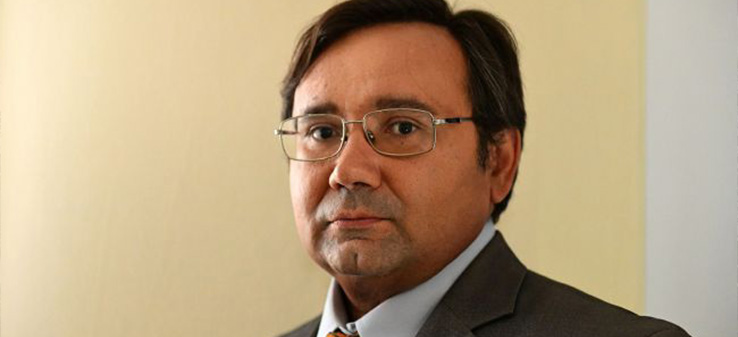
Exclusive interview with Ainur Kurmanov, Kazakh political analyst
Endnote
[1] The term “cordon sanitaire” in geopolitics refers to a political strategy of creating a buffer zone made up of smaller countries in order to isolate a larger hostile power and prevent the expansion of its influence. The term was widely used after the World War I to refer to countries (such as Poland, Finland, and the Baltic states) that separated Soviet Russia from the rest of Europe.
In recent years, U.S. cooperation with Central Asian countries in the defense and military spheres has become one of the important dimensions of Washington’s growing presence in the region. This cooperation, which ranges from training and enhancing the capabilities of military forces to the transfer of equipment and the development of technical capacities, has gained greater significance amid the growing competition among major powers in Central Asia. However, the extent of the initiative and motivation of the United States and the regional countries in advancing this cooperation, as well as the constraints arising from the security commitments of Central Asian states, are matters worthy of consideration.
To examine this issue more closely, the Institute for East Strategic Studies (IESS) conducted an exclusive interview with Ainur Kurmanov, a Kazakh political analyst, examining the process and nature of U.S. military cooperation with the Central Asian states, the main motivations and drivers behind this cooperation, and its possible implications for the regional security balance and Iran’s interests.
IESS: How would you assess the process of military cooperation between Central Asia and the United States over the past decade?
Kurmanov: Military cooperation between Central Asian countries and the United States has certainly strengthened in recent years. Examples include the annual Steppe Eagle exercises, which are held jointly with NATO units, as well as command-and-staff exercises in Tajikistan that were held this year. In addition, KAZCENT, the NATO training and education center, has been operating in Karaganda for many years. Two years ago, a Peacekeeping Operations Center was also inaugurated in Kazakhstan in the presence of Daniel Rosenblum, the U.S. Ambassador to Kazakhstan. This demonstrated the importance the Americans attach to creating a structure and mechanism for monitoring and training Kazakh military personnel and officers.
At the same time, the armed forces and border units of Central Asian countries periodically receive military equipment from the United States and participate in training courses. For example, The Security Cooperation Office at the U.S. Embassy in Kazakhstan, together with the Border Service of Kazakhstan, completed training for operators/users of AeroVironment Raven— which is a small hand-launched remote-controlled unmanned aerial vehicle (SUAV) — in 2022. The Kazakh side has also purchased certain types of U.S. military equipment.
IESS: In this process, do you think the U.S. side has shown a greater inclination toward military cooperation, or have the Central Asian countries themselves been more insistent on expanding such cooperation? What is the main driver?
Kurmanov: In my view, both sides are seeking to expand military cooperation because they have their own interests. The Americans are trying to increase their influence in the region through this approach. In a sense, they are trying to revive their military presence in the region after the withdrawal from Afghanistan, under the cover of “training centers,” the deployment of advisers, and military exercises. In addition, some of the former logistical infrastructure that had been used to supply and support NATO forces in Afghanistan remains in Kazakhstan and Uzbekistan. Moreover, various munitions and equipment left behind after the withdrawal of these forces were also transferred to the armed forces of these republics.
Local ruling elites also want to maintain the U.S. military umbrella as part of their “multi-vector policy,” especially since Washington has consistently declared—both during C5+1 meetings and in bilateral talks involving Presidents Biden and Trump—that it supports the independence, territorial integrity, and sovereignty of these republics.
The leaders of Central Asian countries intend to increase exports of extracted minerals—primarily rare earth metals — that are essential for Western military-industrial complexes and the manufacture of weaponry for NATO armies. Accordingly, the development of military-technical cooperation is viewed as an additional guarantee for strengthening the position of American mining companies in the region. In addition, Astana and Tashkent seek to use this approach to neutralize Russian influence and establish a balance against Chinese influence.
IESS: what have been the main areas of military cooperation between Uzbekistan, Kazakhstan, and Turkmenistan and the United States so far in terms of technical fields? Have they focused on ground equipment, personnel training, new technologies, or other areas?
Kurmanov: Over the past decade, the main areas of military cooperation between Uzbekistan, Kazakhstan, Turkmenistan, and the United States have included training military personnel at training centers and conducting various joint exercises. The United States also provides these countries with new equipment and technologies.
In the military sphere, the Central Asian countries are concentrating primarily on the localization of production or procurement of armored vehicles—usually Turkish-made ones—as well as drones, air-defense and radar systems, and technical and aerial reconnaissance equipment. These needs are being met to some extent through the collective defense-industrial framework of the Organization of Turkic States, alongside a gradual transition toward NATO standards. This indicates the desire of Central Asian countries to equip their forces with Western hardware, as part of plans to expand the size of their armed forces.
IESS: The United States has designated the National Guards of different U.S. states as partners in its military cooperation with Central Asian countries. How do you view the rationale behind this division of labor, and why have National Guards essentially become the partners in U.S. military cooperation with Central Asian countries?
Kurmanov: This is a model of cooperation that Washington impose. This model is created not only vertically, but also horizontally through cooperation with various agencies and even National Guard units.
The idea behind such relations is to strengthen interaction; personnel from different agencies, branches, and military units become familiar with one another and establish contacts. During these meetings, U.S. propaganda objectives are also showcased in the "best possible way", and information is collected from delegations of Central Asian countries regarding the counterterrorism and counterinsurgency tactics of their armed forces, which have largely been passed on to them by the Russian military.
Thus, the Pentagon has a comprehensive view of the structure, training methods, personnel, and programs of the armed forces of the former Soviet republics, and through the transfer of software and the exchange of experience, it is also gradually creating a system of external control and management in these countries.
IESS: The logic of expanding military cooperation is generally based on the threats countries perceive for themselves. In your view, what is the most important threat or challenge that has driven Uzbekistan toward cooperation with the United States in this field?
Kurmanov: Since suspending its membership in the Collective Security Treaty Organization (CSTO) during the era of Islam Karimov, Tashkent has pursued a policy of equal distance and neutrality. In reality, however, it wants to minimize Russia’s military-technical influence in the country and limit China’s advance. Uzbekistan’s ruling elites fear becoming Beijing’s puppet or falling back into Moscow’s embrace. The development of military-political relations with the United States as well as with NATO (indirectly through Turkey), is part of a plan to create such barriers against Russia and China.
We should not overlook the growing influence of the idea of “Turkic integration” which is done through the transformation of allied territories into a full-fledged military-political bloc, and the creation of a unified military-industrial complex. Tashkent seeks to adopt NATO standards through Baku and Ankara. The roots of this approach lie in the Eurocentrism of the ruling elites in Uzbekistan and Kazakhstan, who, through a sharp increase in the share of American, British, and European capital in their economies, are seeking greater integration into the Western system. In this regard, Tashkent is largely emulating Astana.
IESS: Has the identification of weaknesses in the Russian military during the war in Ukraine also influenced this trend?
Kurmanov: I cannot confirm or reject this theory because I do not have complete information on the subject. However, what is evident is that a gradual distancing from the Russian army and the CSTO has been underway for some time—a process that began during the Karimov era, and has now accelerated. The main driver was probably the situation in Afghanistan, rather than Ukraine. Tashkent has established strong and friendly relations with the Taliban government, and therefore feels secure regarding its southern border and no longer relies on Moscow’s military umbrella.
IESS: Some Central Asian countries, such as Kazakhstan, are members of the CSTO. To what extent do you think these countries’ military cooperation with the United States can expand? Do you think their cooperation with the United States will be limited, or their commitments to the CSTO?
Kurmanov: In my view, the CSTO has currently become a formal association that exists largely on paper. At one time, the region’s local elites viewed Russia as an opportunity to receive military-technical assistance and a free security umbrella, particularly because of their proximity to Afghanistan. After the Taliban came to power and regional elites developed good-neighborly relations with the movement (perhaps with the exception of Tajikistan), the former importance of Russia and the CSTO for regional leaders declined sharply. In addition, they have prioritized “Turkic integration” and rapprochement with the West through Turkey. Accordingly, the role of the CSTO will decline further, particularly following Armenia’s suspension of participation and the launch of the Zangezur Corridor, or the Trump Route.
IESS: Kazakhstan’s President Kassym-Jomart Tokayev recently stated that the Organization of Turkic States cannot become a military bloc and should not move toward becoming a military alliance. How do you assess this position within the framework of this analysis?
Kurmanov: As a diplomat, Tokayev has repeatedly made contradictory statements regarding the country’s domestic policy. For example, two years ago, he announced that no further amendments would be made to the Constitution of the Republic of Kazakhstan, that his term in office would not be extended, and that his previous presidential terms would not be “reset.” However, this year a referendum was held to approve a new constitution, and subsequently the Constitutional Court “reset” his previous presidential terms. The same approach is being applied here as well: further obscuring and concealing the real nature of the integration process within the Organization of Turkic States—even though the summits contain rhetoric to the contrary, and measures are being taken to create a unified military-industrial complex, localize the production of Turkish weapons, train officers at Turkish military academies, and conduct joint exercises.
IESS: Turkmenistan is a neutral country that borders Iran, Russia, and China, as the three principal adversaries of the United States. Do you think U.S.-Turkmen military cooperation could affect the level and nature of Ashgabat’s neutrality?
Kurmanov: This cannot be ruled out in the long term, because Turkmenistan’s “neutral status” within the Organization of Turkic States is also gradually changing, and the country is being actively drawn, through Baku, into “Turkic integration” and the orbit of the European Union and the United States. At present, of course, the focus is on expanding economic relations and supplying gas and minerals, but such forms of cooperation usually move rapidly into military-political issues as well. For now, the only factor holding Ashgabat back is Beijing’s economic influence and China’s sustained diplomatic pressure. Therefore, the effectiveness and continuity of this factor will be decisive in determining the extent and pace of Turkmenistan’s rapprochement with the United States and the West.
IESS: In general, the “policy of neutrality” is understood not as an independent choice by governments, but rather as a kind of “agreement among powers.” In the case of Turkmenistan, Russia and the United States obviously play central roles in this regard. Do you think the United States is considering withdrawing from such an informal agreement?
Kurmanov: In my view, by drawing Turkmenistan into “Turkic integration”, the United States is attempting to shift the regional balance of power in its own favor. Indirect evidence of this can be seen at the recent summit of Central Asian leaders in Kyrgyzstan, with the participation of the President of Turkmenistan as a full member and the President of Azerbaijan. This represents a concrete step toward Turkic integration, specifically through this framework.
IESS: What potential threats to Iran could the U.S. presence in Turkmenistan and the Caspian Sea pose in the future?
Kurmanov: The U.S. presence in the Caspian Sea—through Turkmenistan or Azerbaijan—would significantly alter the balance of power in the region and in the Caspian basin, to the benefit of pro-Western factions within the ruling elites of these countries. This would accelerate the transition of their armed forces toward NATO standards and draw them into the orbit of U.S.-aligned satellite countries. Obviously, the leadership of Turkmenistan is also facing pressure from Turkey to make the “right choice” by aligning with the Organization of Turkic States and the United States. The West’s main objective is to create a belt of isolation around Iran from the north, cut logistical routes, and eliminate geostrategic bridges to Russia. The launch of the Trump Route, which is becoming the backbone of the Trans-Caspian Corridor and connects the Turkic republics of Central Asia to the West, has also created a particular incentive.
IESS: What threats the expansion of U.S. defense and military cooperation could create for Iran, Russia, and China in Central Asia?
Kurmanov: As I mentioned earlier, this cooperation is taking place at various levels and is also being pursued through Turkey and Azerbaijan, the European Union, the Arab monarchies, and more recently Israel— which act as satellites of Washington and essentially pursue common and coordinated objectives. Therefore, this issue should be viewed through the broader lens of strengthening the overall influence of the “collective West” in Central Asia.
For Russia, China, and Iran, this creates existential threats because it will push the Central Asian republics toward the imperial ambitions of the United States to spread conflict and instability. Washington and its allies are seeking to create a chain of hostile states and even a “cordon sanitaire” [1] or a “buffer zone,” cut the geostrategic bridges between Moscow, Beijing, and Tehran, and transform Central Asia from a transit region into a dead-end region —that would be used solely for exporting strategic raw materials, and as a springboard for further aggression against their adversaries.
To examine this issue more closely, the Institute for East Strategic Studies (IESS) conducted an exclusive interview with Ainur Kurmanov, a Kazakh political analyst, examining the process and nature of U.S. military cooperation with the Central Asian states, the main motivations and drivers behind this cooperation, and its possible implications for the regional security balance and Iran’s interests.
IESS: How would you assess the process of military cooperation between Central Asia and the United States over the past decade?
Kurmanov: Military cooperation between Central Asian countries and the United States has certainly strengthened in recent years. Examples include the annual Steppe Eagle exercises, which are held jointly with NATO units, as well as command-and-staff exercises in Tajikistan that were held this year. In addition, KAZCENT, the NATO training and education center, has been operating in Karaganda for many years. Two years ago, a Peacekeeping Operations Center was also inaugurated in Kazakhstan in the presence of Daniel Rosenblum, the U.S. Ambassador to Kazakhstan. This demonstrated the importance the Americans attach to creating a structure and mechanism for monitoring and training Kazakh military personnel and officers.
At the same time, the armed forces and border units of Central Asian countries periodically receive military equipment from the United States and participate in training courses. For example, The Security Cooperation Office at the U.S. Embassy in Kazakhstan, together with the Border Service of Kazakhstan, completed training for operators/users of AeroVironment Raven— which is a small hand-launched remote-controlled unmanned aerial vehicle (SUAV) — in 2022. The Kazakh side has also purchased certain types of U.S. military equipment.
IESS: In this process, do you think the U.S. side has shown a greater inclination toward military cooperation, or have the Central Asian countries themselves been more insistent on expanding such cooperation? What is the main driver?
Kurmanov: In my view, both sides are seeking to expand military cooperation because they have their own interests. The Americans are trying to increase their influence in the region through this approach. In a sense, they are trying to revive their military presence in the region after the withdrawal from Afghanistan, under the cover of “training centers,” the deployment of advisers, and military exercises. In addition, some of the former logistical infrastructure that had been used to supply and support NATO forces in Afghanistan remains in Kazakhstan and Uzbekistan. Moreover, various munitions and equipment left behind after the withdrawal of these forces were also transferred to the armed forces of these republics.
Local ruling elites also want to maintain the U.S. military umbrella as part of their “multi-vector policy,” especially since Washington has consistently declared—both during C5+1 meetings and in bilateral talks involving Presidents Biden and Trump—that it supports the independence, territorial integrity, and sovereignty of these republics.
The leaders of Central Asian countries intend to increase exports of extracted minerals—primarily rare earth metals — that are essential for Western military-industrial complexes and the manufacture of weaponry for NATO armies. Accordingly, the development of military-technical cooperation is viewed as an additional guarantee for strengthening the position of American mining companies in the region. In addition, Astana and Tashkent seek to use this approach to neutralize Russian influence and establish a balance against Chinese influence.
IESS: what have been the main areas of military cooperation between Uzbekistan, Kazakhstan, and Turkmenistan and the United States so far in terms of technical fields? Have they focused on ground equipment, personnel training, new technologies, or other areas?
Kurmanov: Over the past decade, the main areas of military cooperation between Uzbekistan, Kazakhstan, Turkmenistan, and the United States have included training military personnel at training centers and conducting various joint exercises. The United States also provides these countries with new equipment and technologies.
In the military sphere, the Central Asian countries are concentrating primarily on the localization of production or procurement of armored vehicles—usually Turkish-made ones—as well as drones, air-defense and radar systems, and technical and aerial reconnaissance equipment. These needs are being met to some extent through the collective defense-industrial framework of the Organization of Turkic States, alongside a gradual transition toward NATO standards. This indicates the desire of Central Asian countries to equip their forces with Western hardware, as part of plans to expand the size of their armed forces.
IESS: The United States has designated the National Guards of different U.S. states as partners in its military cooperation with Central Asian countries. How do you view the rationale behind this division of labor, and why have National Guards essentially become the partners in U.S. military cooperation with Central Asian countries?
Kurmanov: This is a model of cooperation that Washington impose. This model is created not only vertically, but also horizontally through cooperation with various agencies and even National Guard units.
The idea behind such relations is to strengthen interaction; personnel from different agencies, branches, and military units become familiar with one another and establish contacts. During these meetings, U.S. propaganda objectives are also showcased in the "best possible way", and information is collected from delegations of Central Asian countries regarding the counterterrorism and counterinsurgency tactics of their armed forces, which have largely been passed on to them by the Russian military.
Thus, the Pentagon has a comprehensive view of the structure, training methods, personnel, and programs of the armed forces of the former Soviet republics, and through the transfer of software and the exchange of experience, it is also gradually creating a system of external control and management in these countries.
IESS: The logic of expanding military cooperation is generally based on the threats countries perceive for themselves. In your view, what is the most important threat or challenge that has driven Uzbekistan toward cooperation with the United States in this field?
Kurmanov: Since suspending its membership in the Collective Security Treaty Organization (CSTO) during the era of Islam Karimov, Tashkent has pursued a policy of equal distance and neutrality. In reality, however, it wants to minimize Russia’s military-technical influence in the country and limit China’s advance. Uzbekistan’s ruling elites fear becoming Beijing’s puppet or falling back into Moscow’s embrace. The development of military-political relations with the United States as well as with NATO (indirectly through Turkey), is part of a plan to create such barriers against Russia and China.
We should not overlook the growing influence of the idea of “Turkic integration” which is done through the transformation of allied territories into a full-fledged military-political bloc, and the creation of a unified military-industrial complex. Tashkent seeks to adopt NATO standards through Baku and Ankara. The roots of this approach lie in the Eurocentrism of the ruling elites in Uzbekistan and Kazakhstan, who, through a sharp increase in the share of American, British, and European capital in their economies, are seeking greater integration into the Western system. In this regard, Tashkent is largely emulating Astana.
IESS: Has the identification of weaknesses in the Russian military during the war in Ukraine also influenced this trend?
Kurmanov: I cannot confirm or reject this theory because I do not have complete information on the subject. However, what is evident is that a gradual distancing from the Russian army and the CSTO has been underway for some time—a process that began during the Karimov era, and has now accelerated. The main driver was probably the situation in Afghanistan, rather than Ukraine. Tashkent has established strong and friendly relations with the Taliban government, and therefore feels secure regarding its southern border and no longer relies on Moscow’s military umbrella.
IESS: Some Central Asian countries, such as Kazakhstan, are members of the CSTO. To what extent do you think these countries’ military cooperation with the United States can expand? Do you think their cooperation with the United States will be limited, or their commitments to the CSTO?
Kurmanov: In my view, the CSTO has currently become a formal association that exists largely on paper. At one time, the region’s local elites viewed Russia as an opportunity to receive military-technical assistance and a free security umbrella, particularly because of their proximity to Afghanistan. After the Taliban came to power and regional elites developed good-neighborly relations with the movement (perhaps with the exception of Tajikistan), the former importance of Russia and the CSTO for regional leaders declined sharply. In addition, they have prioritized “Turkic integration” and rapprochement with the West through Turkey. Accordingly, the role of the CSTO will decline further, particularly following Armenia’s suspension of participation and the launch of the Zangezur Corridor, or the Trump Route.
IESS: Kazakhstan’s President Kassym-Jomart Tokayev recently stated that the Organization of Turkic States cannot become a military bloc and should not move toward becoming a military alliance. How do you assess this position within the framework of this analysis?
Kurmanov: As a diplomat, Tokayev has repeatedly made contradictory statements regarding the country’s domestic policy. For example, two years ago, he announced that no further amendments would be made to the Constitution of the Republic of Kazakhstan, that his term in office would not be extended, and that his previous presidential terms would not be “reset.” However, this year a referendum was held to approve a new constitution, and subsequently the Constitutional Court “reset” his previous presidential terms. The same approach is being applied here as well: further obscuring and concealing the real nature of the integration process within the Organization of Turkic States—even though the summits contain rhetoric to the contrary, and measures are being taken to create a unified military-industrial complex, localize the production of Turkish weapons, train officers at Turkish military academies, and conduct joint exercises.
IESS: Turkmenistan is a neutral country that borders Iran, Russia, and China, as the three principal adversaries of the United States. Do you think U.S.-Turkmen military cooperation could affect the level and nature of Ashgabat’s neutrality?
Kurmanov: This cannot be ruled out in the long term, because Turkmenistan’s “neutral status” within the Organization of Turkic States is also gradually changing, and the country is being actively drawn, through Baku, into “Turkic integration” and the orbit of the European Union and the United States. At present, of course, the focus is on expanding economic relations and supplying gas and minerals, but such forms of cooperation usually move rapidly into military-political issues as well. For now, the only factor holding Ashgabat back is Beijing’s economic influence and China’s sustained diplomatic pressure. Therefore, the effectiveness and continuity of this factor will be decisive in determining the extent and pace of Turkmenistan’s rapprochement with the United States and the West.
IESS: In general, the “policy of neutrality” is understood not as an independent choice by governments, but rather as a kind of “agreement among powers.” In the case of Turkmenistan, Russia and the United States obviously play central roles in this regard. Do you think the United States is considering withdrawing from such an informal agreement?
Kurmanov: In my view, by drawing Turkmenistan into “Turkic integration”, the United States is attempting to shift the regional balance of power in its own favor. Indirect evidence of this can be seen at the recent summit of Central Asian leaders in Kyrgyzstan, with the participation of the President of Turkmenistan as a full member and the President of Azerbaijan. This represents a concrete step toward Turkic integration, specifically through this framework.
IESS: What potential threats to Iran could the U.S. presence in Turkmenistan and the Caspian Sea pose in the future?
Kurmanov: The U.S. presence in the Caspian Sea—through Turkmenistan or Azerbaijan—would significantly alter the balance of power in the region and in the Caspian basin, to the benefit of pro-Western factions within the ruling elites of these countries. This would accelerate the transition of their armed forces toward NATO standards and draw them into the orbit of U.S.-aligned satellite countries. Obviously, the leadership of Turkmenistan is also facing pressure from Turkey to make the “right choice” by aligning with the Organization of Turkic States and the United States. The West’s main objective is to create a belt of isolation around Iran from the north, cut logistical routes, and eliminate geostrategic bridges to Russia. The launch of the Trump Route, which is becoming the backbone of the Trans-Caspian Corridor and connects the Turkic republics of Central Asia to the West, has also created a particular incentive.
IESS: What threats the expansion of U.S. defense and military cooperation could create for Iran, Russia, and China in Central Asia?
Kurmanov: As I mentioned earlier, this cooperation is taking place at various levels and is also being pursued through Turkey and Azerbaijan, the European Union, the Arab monarchies, and more recently Israel— which act as satellites of Washington and essentially pursue common and coordinated objectives. Therefore, this issue should be viewed through the broader lens of strengthening the overall influence of the “collective West” in Central Asia.
For Russia, China, and Iran, this creates existential threats because it will push the Central Asian republics toward the imperial ambitions of the United States to spread conflict and instability. Washington and its allies are seeking to create a chain of hostile states and even a “cordon sanitaire” [1] or a “buffer zone,” cut the geostrategic bridges between Moscow, Beijing, and Tehran, and transform Central Asia from a transit region into a dead-end region —that would be used solely for exporting strategic raw materials, and as a springboard for further aggression against their adversaries.
Endnote
[1] The term “cordon sanitaire” in geopolitics refers to a political strategy of creating a buffer zone made up of smaller countries in order to isolate a larger hostile power and prevent the expansion of its influence. The term was widely used after the World War I to refer to countries (such as Poland, Finland, and the Baltic states) that separated Soviet Russia from the rest of Europe.
News code:4385