


10 Sep 2026
Publish Date
Saturday 25 July 2026 - 12:12


recommended
1
Iran’s economic presence in Afghanistan
Geo-economic Reconfiguration of Iran and Afghanistan: Opportunities, Challenges, and Strategic Imperatives
For the Islamic Republic of Iran, Afghanistan is not merely an eastern neighbor; rather, it constitutes an integral part of the country’s surrounding strategic environment. The long shared border, historical and cultural ties, linguistic and religious affinities, as well as economic interdependence have caused developments in Afghanistan to exert direct effects on Iran’s national security, the development of its eastern provinces, foreign trade, and even its regional relations. From this perspective, expanding economic relations with Afghanistan is not merely an economic choice but also a component of Iran’s broader strategy for managing its surrounding environment and strengthening its regional position.
By: Javid Hosseini
What You Read in This Report:
1.Introduction
2.Iran’s More Successful Presence in the Afghan Market: Structural Advantages and Internal Challenges
3.Geo-economic Opportunities for Iran in Afghanistan
4.Strategic Threats and Policy Imperatives
5.Conclusion
What You Read in This Report:
1.Introduction
2.Iran’s More Successful Presence in the Afghan Market: Structural Advantages and Internal Challenges
3.Geo-economic Opportunities for Iran in Afghanistan
4.Strategic Threats and Policy Imperatives
5.Conclusion
Introduction
For the past four decades, Afghanistan has had little place in regional economic equations due to security concerns, civil wars, competition among external powers, and chronic governance crises. Yet, owing to its geographical location at the crossroads of Central Asia, the Indian subcontinent, China, and West Asia, Afghanistan has the potential to serve as a connecting link for regional trade and transit networks. Should relative stability emerge, this capacity could transform Afghanistan’s role from a center of crisis into a regional transportation crossroads. Recent developments and the gradual emergence of a new regional order in Central Asia, South Asia, and West Asia have once again highlighted Afghanistan’s geo-economic significance.
For the Islamic Republic of Iran, Afghanistan is not merely an eastern neighbor but part of the country’s surrounding strategic environment. The long shared border, historical and cultural connections, linguistic and religious commonalities, and mutual economic dependencies have made developments in Afghanistan directly influential on Iran’s national security as well as the development of its eastern regions, foreign trade, and even Iran’s regional relations. From this perspective, expanding economic relations with Afghanistan is not merely an economic choice but also forms part of Iran’s broader strategy for managing its neighborhood and enhancing its regional standing.
Over the past two decades, Iran has succeeded in establishing itself as one of Afghanistan’s most important trading partners. Investments in transit infrastructure such as the Dogharoon–Herat road, Chabahar Port, and the Khaf–Herat railway have created new opportunities for linking Afghanistan to the global economy through Iran. Nevertheless, increasing competition from regional actors, the continuation of economic sanctions, and weaknesses in certain domestic mechanisms have made the preservation and enhancement of this position dependent upon a more coherent and strategic approach.
Under such circumstances, assessing the capacities, limitations, opportunities, and threats facing Iran in the Afghan market can provide an appropriate basis for designing an effective geo-economic strategy. In fact, the future of Iran’s economic presence in Afghanistan depends more than ever on the country’s ability to transform its geographical and historical advantages into sustainable instruments of economic and regional cooperation.
Iran’s More Successful Presence in the Afghan Market: Structural Advantages and Internal Challenges
Iran possesses a range of structural advantages that make it one of Afghanistan’s most important potential partners in trade, transit, and economic development. The first and most significant advantage is its geographical position. At a time when tensions in Kabul–Islamabad relations have resulted in Afghanistan losing access to Pakistani ports, Iran is the only neighboring country that provides direct and extensive access to international open waters and can connect this landlocked country to global trade networks. This characteristic is strategically important for Kabul, particularly given Afghanistan’s longstanding dependence on routes through Pakistan.
This geographical advantage is complemented by Iran’s relatively extensive transportation infrastructure. Iran’s Southern ports, its developed road network, its eastern railway lines, and the Khaf–Herat rail connection together provide Afghanistan with a variety of alternative trade routes. Unlike many competing corridors that rely heavily on a single route, Iran enjoys diversified transit pathways, providing greater flexibility and security for economic actors.
Furthermore, Iran’s borders with Afghanistan have enjoyed greater relative stability over the past two decades compared with many regional crossings. Border terminals at Dogharoon, Milak, and Mahirud have repeatedly managed to sustain trade flows even during times of crisis. This track record has generated considerable confidence among Afghan traders in Iran’s commercial routes.
From an economic perspective, Iran has also become an almost irreplaceable supplier for Afghanistan in several strategic sectors. Exports of petroleum products, liquefied gas, cement, steel, petrochemical products, and other essential commodities play a crucial role in meeting the needs of the Afghan market. Geographic proximity and lower transportation costs have enabled many of these products to be supplied at competitive prices. Alongside these advantages, the ability of Iranian companies to provide technical and engineering services represent a valuable opportunity for their participation in Afghanistan’s construction, energy, transportation, and urban service projects.
In addition to economic and infrastructural advantages, the importance of the cultural and social ties between the two countries should not be overlooked. The existence of a common language across a significant portion of Afghanistan, the extensive networks of economic actors in both countries, and the historical background of commercial relations have reduced transaction costs and enhanced mutual trust. This social capital constitutes one of Iran’s major competitive advantages compared to many regional rivals.
Despite these capacities, Iran also faces a series of internal limitations that hinder the full utilization of existing opportunities. The most significant challenge is the financial and banking restrictions resulting from sanctions and the country’s partial exclusion from the global financial system. The difficulty of formal money transfers has increased reliance on informal remittance networks (hawala) and alternative mechanisms, raising both costs and risks. Moreover, severe exchange-rate fluctuations in Iran’s economy have reduced predictability for Afghan economic actors. Since many traders seek stability in contracts and financial transactions, currency instability can redirect part of the trade toward competing markets.
In addition, certain institutional and executive weaknesses have affected Iran’s performance. Lengthy customs procedures, insufficient smart border infrastructure, weaknesses in the development of logistics centers, limitations in providing financial services to Afghan traders, and inadequate coordination among responsible institutions are among the factors reducing Iran’s competitiveness. Most importantly, the absence of a comprehensive long-term framework for developing economic relations with Afghanistan has resulted in policies that are often fragmented, short-term, and lacking clearly defined quantitative objectives.
Geo-economic Opportunities for Iran in Afghanistan
Recent developments in Afghanistan have created new opportunities for strengthening Iran’s economic presence. One of the most important opportunities is the declining confidence of some Afghan economic actors in Pakistan’s transit routes. Repeated closures of border crossings, the political use of transit leverage, and recurring tensions between Kabul and Islamabad have prompted many Afghan traders to seek more stable and reliable alternatives; and Iran has the capacity to present itself as a more dependable transit partner.
The energy sector is another major area of economic cooperation between the two countries. Afghanistan continues to suffer from a severe shortage of energy production infrastructure and meets a significant portion of its needs through imports. Iran’s vast energy resources and geographic proximity provide an opportunity to become Afghanistan’s principal supplier of fuel and electricity. This advantage not only brings economic benefits to Iran but can also deepen economic interdependence between the two countries.
Another important opportunity is Afghanistan’s extensive need for infrastructure reconstruction. Decades of war and instability have damaged much of the country’s transportation, energy, healthcare, and public service infrastructure. Given their substantial experience in construction projects and competitive costs, Iranian companies are well positioned to participate in Afghanistan’s reconstruction process. The export of technical and engineering services could become one of the main pillars of economic cooperation in the coming years.
The healthcare sector presents similar opportunities. Weaknesses in Afghanistan’s healthcare system and the reduced presence of many international organizations have increased demand for pharmaceuticals, medical equipment, and healthcare services. By leveraging its production capacities, Iran can secure a stronger position in Afghanistan’s healthcare market and even meet part of the country’s medical needs through health tourism.
Moreover, the development of joint special economic zones at the Dogharoon and Milak border areas could facilitate the formation of regional production and distribution chains. Such zones would not only ease bilateral trade but could also evolve into centers for processing goods and re-exporting them to regional markets.
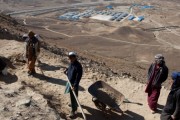
Another strategic opportunity lies in Iran’s potential role in exporting Afghanistan’s mineral resources. Afghanistan possesses significant reserves of iron ore, copper, lithium, and other strategic minerals. Given Afghanistan’s limited access to open waters, Iran’s transit routes—particularly Chabahar Port—could become the main gateway for exporting these resources to global markets. If such a scenario materializes, Iran’s geo-economic position in the region would be substantially strengthened.
Strategic Threats and Policy Imperatives
Alongside these opportunities, a number of threats cast a shadow over the future of Iran’s economic presence in Afghanistan. The most significant short-term threat is the possibility of renewed insecurity and instability in Afghanistan. Any escalation of internal conflict or expansion of insecurity in the country’s western provinces could directly affect the security of Iran’s trade and transit routes and disrupt commercial flows.
At the regional level, competition over transportation corridors is intensifying rapidly. The China–Pakistan Economic Corridor (CPEC) and the development of Gwadar Port with substantial Chinese financial support represent major challenges to Chabahar. Meanwhile, Turkey is seeking to increase its share of regional trade through the development of the Middle Corridor and the expansion of its economic ties with Central Asia. Furthermore, the active involvement of the United Arab Emirates and Saudi Arabia in regional infrastructure projects indicates that competition for economic influence in Afghanistan has entered a new phase.
U.S. economic sanctions also remain one of the most significant obstacles to the expansion of Iran’s transit capacities. Any new restrictions targeting ports, transportation lines, or financial networks associated with Iran could complicate efforts to attract foreign investment and develop strategic infrastructure.
At the same time, Afghanistan’s own economic conditions constitute a limiting factor. Widespread poverty, declining foreign aid, recurring droughts, and reduced household purchasing power have constrained the country’s consumer market capacity more than before. Consequently, competition among regional exporters for a larger share of this market has intensified. Moreover, the lack of stability in Afghanistan’s trade regulations poses additional challenges for economic actors. Sudden changes in tariffs, taxes, or customs procedures can complicate long-term planning and increase investment risks.
Accordingly, Iran’s success in the Afghan market requires the formulation of a comprehensive geo-economic strategy capable of integrating the country’s economic, transit, and political capacities within a coherent framework. Such a strategy should focus on developing border infrastructure, facilitating trade procedures, establishing sustainable financial mechanisms, expanding joint investments, strengthening the role of Chabahar, and increasing exports of technical and engineering services. The creation of a single coordinating institution for economic policymaking toward Afghanistan could also prevent fragmented decision-making and overlapping responsibilities.
Conclusion
Afghanistan is becoming one of the most important arenas of geo-economic competition in the geographical sphere of eastern Iran. Iran’s structural advantages—including access to open waters, transit infrastructure, industrial capabilities, and cultural ties—provide a unique opportunity for the country to expand its economic influence in Afghanistan. However, realizing these capacities requires overcoming internal constraints, managing regional competition, and adopting a coherent long-term strategy.
In reality, the future of Iran–Afghanistan economic relations depends not only on the volume of trade but also on Tehran’s ability to transform its geographical position and historical advantages into a sustainable architecture of economic cooperation. The sooner the Islamic Republic of Iran moves beyond short-term approaches and adopts a comprehensive policy grounded in geo-economic logic toward Afghanistan, the greater its chances of becoming Afghanistan’s principal partner in economic development and one of the key actors shaping the region’s future economic order.
Javid Hosseini is a researcher on Afghan affairs.For the past four decades, Afghanistan has had little place in regional economic equations due to security concerns, civil wars, competition among external powers, and chronic governance crises. Yet, owing to its geographical location at the crossroads of Central Asia, the Indian subcontinent, China, and West Asia, Afghanistan has the potential to serve as a connecting link for regional trade and transit networks. Should relative stability emerge, this capacity could transform Afghanistan’s role from a center of crisis into a regional transportation crossroads. Recent developments and the gradual emergence of a new regional order in Central Asia, South Asia, and West Asia have once again highlighted Afghanistan’s geo-economic significance.
For the Islamic Republic of Iran, Afghanistan is not merely an eastern neighbor but part of the country’s surrounding strategic environment. The long shared border, historical and cultural connections, linguistic and religious commonalities, and mutual economic dependencies have made developments in Afghanistan directly influential on Iran’s national security as well as the development of its eastern regions, foreign trade, and even Iran’s regional relations. From this perspective, expanding economic relations with Afghanistan is not merely an economic choice but also forms part of Iran’s broader strategy for managing its neighborhood and enhancing its regional standing.
Over the past two decades, Iran has succeeded in establishing itself as one of Afghanistan’s most important trading partners. Investments in transit infrastructure such as the Dogharoon–Herat road, Chabahar Port, and the Khaf–Herat railway have created new opportunities for linking Afghanistan to the global economy through Iran. Nevertheless, increasing competition from regional actors, the continuation of economic sanctions, and weaknesses in certain domestic mechanisms have made the preservation and enhancement of this position dependent upon a more coherent and strategic approach.
Under such circumstances, assessing the capacities, limitations, opportunities, and threats facing Iran in the Afghan market can provide an appropriate basis for designing an effective geo-economic strategy. In fact, the future of Iran’s economic presence in Afghanistan depends more than ever on the country’s ability to transform its geographical and historical advantages into sustainable instruments of economic and regional cooperation.
Iran’s More Successful Presence in the Afghan Market: Structural Advantages and Internal Challenges
Iran possesses a range of structural advantages that make it one of Afghanistan’s most important potential partners in trade, transit, and economic development. The first and most significant advantage is its geographical position. At a time when tensions in Kabul–Islamabad relations have resulted in Afghanistan losing access to Pakistani ports, Iran is the only neighboring country that provides direct and extensive access to international open waters and can connect this landlocked country to global trade networks. This characteristic is strategically important for Kabul, particularly given Afghanistan’s longstanding dependence on routes through Pakistan.
This geographical advantage is complemented by Iran’s relatively extensive transportation infrastructure. Iran’s Southern ports, its developed road network, its eastern railway lines, and the Khaf–Herat rail connection together provide Afghanistan with a variety of alternative trade routes. Unlike many competing corridors that rely heavily on a single route, Iran enjoys diversified transit pathways, providing greater flexibility and security for economic actors.
Furthermore, Iran’s borders with Afghanistan have enjoyed greater relative stability over the past two decades compared with many regional crossings. Border terminals at Dogharoon, Milak, and Mahirud have repeatedly managed to sustain trade flows even during times of crisis. This track record has generated considerable confidence among Afghan traders in Iran’s commercial routes.
From an economic perspective, Iran has also become an almost irreplaceable supplier for Afghanistan in several strategic sectors. Exports of petroleum products, liquefied gas, cement, steel, petrochemical products, and other essential commodities play a crucial role in meeting the needs of the Afghan market. Geographic proximity and lower transportation costs have enabled many of these products to be supplied at competitive prices. Alongside these advantages, the ability of Iranian companies to provide technical and engineering services represent a valuable opportunity for their participation in Afghanistan’s construction, energy, transportation, and urban service projects.
In addition to economic and infrastructural advantages, the importance of the cultural and social ties between the two countries should not be overlooked. The existence of a common language across a significant portion of Afghanistan, the extensive networks of economic actors in both countries, and the historical background of commercial relations have reduced transaction costs and enhanced mutual trust. This social capital constitutes one of Iran’s major competitive advantages compared to many regional rivals.
Despite these capacities, Iran also faces a series of internal limitations that hinder the full utilization of existing opportunities. The most significant challenge is the financial and banking restrictions resulting from sanctions and the country’s partial exclusion from the global financial system. The difficulty of formal money transfers has increased reliance on informal remittance networks (hawala) and alternative mechanisms, raising both costs and risks. Moreover, severe exchange-rate fluctuations in Iran’s economy have reduced predictability for Afghan economic actors. Since many traders seek stability in contracts and financial transactions, currency instability can redirect part of the trade toward competing markets.
In addition, certain institutional and executive weaknesses have affected Iran’s performance. Lengthy customs procedures, insufficient smart border infrastructure, weaknesses in the development of logistics centers, limitations in providing financial services to Afghan traders, and inadequate coordination among responsible institutions are among the factors reducing Iran’s competitiveness. Most importantly, the absence of a comprehensive long-term framework for developing economic relations with Afghanistan has resulted in policies that are often fragmented, short-term, and lacking clearly defined quantitative objectives.
Geo-economic Opportunities for Iran in Afghanistan
Recent developments in Afghanistan have created new opportunities for strengthening Iran’s economic presence. One of the most important opportunities is the declining confidence of some Afghan economic actors in Pakistan’s transit routes. Repeated closures of border crossings, the political use of transit leverage, and recurring tensions between Kabul and Islamabad have prompted many Afghan traders to seek more stable and reliable alternatives; and Iran has the capacity to present itself as a more dependable transit partner.
The energy sector is another major area of economic cooperation between the two countries. Afghanistan continues to suffer from a severe shortage of energy production infrastructure and meets a significant portion of its needs through imports. Iran’s vast energy resources and geographic proximity provide an opportunity to become Afghanistan’s principal supplier of fuel and electricity. This advantage not only brings economic benefits to Iran but can also deepen economic interdependence between the two countries.
Another important opportunity is Afghanistan’s extensive need for infrastructure reconstruction. Decades of war and instability have damaged much of the country’s transportation, energy, healthcare, and public service infrastructure. Given their substantial experience in construction projects and competitive costs, Iranian companies are well positioned to participate in Afghanistan’s reconstruction process. The export of technical and engineering services could become one of the main pillars of economic cooperation in the coming years.
The healthcare sector presents similar opportunities. Weaknesses in Afghanistan’s healthcare system and the reduced presence of many international organizations have increased demand for pharmaceuticals, medical equipment, and healthcare services. By leveraging its production capacities, Iran can secure a stronger position in Afghanistan’s healthcare market and even meet part of the country’s medical needs through health tourism.
Moreover, the development of joint special economic zones at the Dogharoon and Milak border areas could facilitate the formation of regional production and distribution chains. Such zones would not only ease bilateral trade but could also evolve into centers for processing goods and re-exporting them to regional markets.
Another strategic opportunity lies in Iran’s potential role in exporting Afghanistan’s mineral resources. Afghanistan possesses significant reserves of iron ore, copper, lithium, and other strategic minerals. Given Afghanistan’s limited access to open waters, Iran’s transit routes—particularly Chabahar Port—could become the main gateway for exporting these resources to global markets. If such a scenario materializes, Iran’s geo-economic position in the region would be substantially strengthened.
Strategic Threats and Policy Imperatives
Alongside these opportunities, a number of threats cast a shadow over the future of Iran’s economic presence in Afghanistan. The most significant short-term threat is the possibility of renewed insecurity and instability in Afghanistan. Any escalation of internal conflict or expansion of insecurity in the country’s western provinces could directly affect the security of Iran’s trade and transit routes and disrupt commercial flows.
At the regional level, competition over transportation corridors is intensifying rapidly. The China–Pakistan Economic Corridor (CPEC) and the development of Gwadar Port with substantial Chinese financial support represent major challenges to Chabahar. Meanwhile, Turkey is seeking to increase its share of regional trade through the development of the Middle Corridor and the expansion of its economic ties with Central Asia. Furthermore, the active involvement of the United Arab Emirates and Saudi Arabia in regional infrastructure projects indicates that competition for economic influence in Afghanistan has entered a new phase.
U.S. economic sanctions also remain one of the most significant obstacles to the expansion of Iran’s transit capacities. Any new restrictions targeting ports, transportation lines, or financial networks associated with Iran could complicate efforts to attract foreign investment and develop strategic infrastructure.
At the same time, Afghanistan’s own economic conditions constitute a limiting factor. Widespread poverty, declining foreign aid, recurring droughts, and reduced household purchasing power have constrained the country’s consumer market capacity more than before. Consequently, competition among regional exporters for a larger share of this market has intensified. Moreover, the lack of stability in Afghanistan’s trade regulations poses additional challenges for economic actors. Sudden changes in tariffs, taxes, or customs procedures can complicate long-term planning and increase investment risks.
Accordingly, Iran’s success in the Afghan market requires the formulation of a comprehensive geo-economic strategy capable of integrating the country’s economic, transit, and political capacities within a coherent framework. Such a strategy should focus on developing border infrastructure, facilitating trade procedures, establishing sustainable financial mechanisms, expanding joint investments, strengthening the role of Chabahar, and increasing exports of technical and engineering services. The creation of a single coordinating institution for economic policymaking toward Afghanistan could also prevent fragmented decision-making and overlapping responsibilities.
Conclusion
Afghanistan is becoming one of the most important arenas of geo-economic competition in the geographical sphere of eastern Iran. Iran’s structural advantages—including access to open waters, transit infrastructure, industrial capabilities, and cultural ties—provide a unique opportunity for the country to expand its economic influence in Afghanistan. However, realizing these capacities requires overcoming internal constraints, managing regional competition, and adopting a coherent long-term strategy.
In reality, the future of Iran–Afghanistan economic relations depends not only on the volume of trade but also on Tehran’s ability to transform its geographical position and historical advantages into a sustainable architecture of economic cooperation. The sooner the Islamic Republic of Iran moves beyond short-term approaches and adopts a comprehensive policy grounded in geo-economic logic toward Afghanistan, the greater its chances of becoming Afghanistan’s principal partner in economic development and one of the key actors shaping the region’s future economic order.
News code:4334
Author : Javid Hoseini Researcher at the Institute for East Strategic Studies (IESS)
Source : East Studies