


8 Sep 2026
Publish Date
Sunday 7 June 2026 - 12:10


recommended
0
Assessment of Behaviors
Central Asia Behavior Toward the U.S.–Zionist Aggression Against Iran
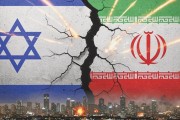
In recent years, major fundamental developments such as the emergence of a new generation of leaders, the war in Ukraine and the sanctions on Russia, regional convergence and increased multilateralism, as well as the rise of the Taliban, have constituted the foundations of change in Central Asia—making it necessary for Iran to adapt to these evolving condition. In these new context, the U.S.–Zionist aggression against Iran (the Ramadan War) has also emerged as a key factor that has been added to all of these variables. In the meanwhile, the behavioral responses of Central Asian countries to this event provide important insights into the trajectory of developments over the past decade and the level of interdependence and convergence between these countries and Iran.
By: Omid Rahimi
14 Minutes Reading
14 Minutes Reading
Introduction
The U.S.–Zionist aggression against Iran or the “Ramadan War” was one of the most decisive developments for Iran since the Islamic Revolution. During this war (which has still not ended), the geopolitical foundations of Iran’s surrounding environment underwent profound transformation, and new behavioral trends and approaches came to dominate Iran’s geopolitical neighborhood. From this perspective and in accordance with ongoing developments, the dialectic of actions and reactions within geopolitical processes will eventually reach a new equilibrium that will determine the emerging order. In such a process, the manner in which states formulate their actions and recalibrate their reactions plays a significant role in shaping the new order.
Accordingly, this report seeks to analyze the behavior of Central Asian governments regarding the Ramadan War. This process includes evaluating their behavior, analyzing the factors and drivers behind their positions, assessing behavioral mechanisms, and examining short-term consequences.
Assessment of Behaviors
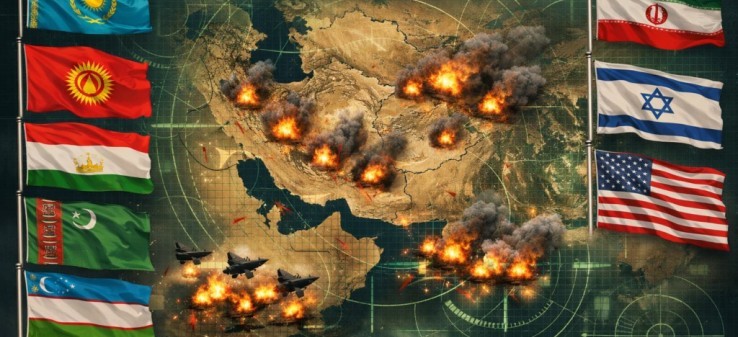
In Central Asia, the level of behavioral responses to the Ramadan War varied considerably. The closest and most convergent position toward Iran was adopted by Tajikistan. While condemning the aggression of the United States and the Zionist regime, Tajikistan did not declare solidarity with Arab countries. In addition, a public and official condolence message on the martyrdom of the Supreme Leader of Iran (with the precise mention of the word "martyrdom") was issued personally by President Emamali Rahmon.
The Tajik government also took a symbolic step by sending 110 trucks of humanitarian aid to Iran. The number 110 corresponding to the Abjad numerical value of the blessed name of Imam Ali (The First Leader of Shiites. (
The government of Uzbekistan, while refraining from condemning the aggression against Iran, issued a general condolence message to Iran’s President Pezeshkian regarding the martyrdom of the Supreme Leader. However, it used the term “passing away” rather than “martyrdom.” Uzbekistan also communicated with Arab countries such as Saudi Arabia and the UAE and expressed solidarity with them. Although it did not explicitly condemn Iran’s actions, it emphasized support for “territorial integrity.” Uzbekistan likewise sent a shipment consisting of several trucks of humanitarian aid to Iran.
Turkmenistan adopted a higher degree of neutrality. Without issuing any statement condemning the aggression, it merely sent a private condolence message through Gurbanguly Berdimuhamedov, the National Leader and Chairman of the People’s Council of Turkmenistan, regarding the martyrdom of the Supreme Leader of Iran. Although the message was officially delivered, it received no coverage in official Turkmen media and was only published by some unofficial websites and social media pages.
Turkmenistan neither condemned Iran’s attacks on U.S. bases in Arab countries nor demonstrated any particular solidarity with Arab states. It also sent four trucks of humanitarian assistance to Iran.
Kyrgyzstan demonstrated a lower level of impartiality and adopted a neutral stance. The Kyrgyz government did not react significantly to the outbreak of the war. Although a condolence message was issued by President Sadyr Japarov, it was not made public and was simply delivered to the Iranian embassy. The government expressed solidarity with some Arab countries, while simultaneously sending a 129-ton shipment of humanitarian aid to Iran.
Kazakhstan adopted the most divergent position toward Iran. In its first response to the war, the Kazakh government expressed solidarity with Arab countries and explicitly condemned Iran’s attacks on U.S. bases located in those states. Beyond this, President Tokayev made remarks concerning the position of the Iranian president and Iran’s power structure that could be regarded as interventionist.
In addition, Kazakhstan was the only Central Asian republic whose president did not issue a condolence message regarding the martyrdom of the Supreme Leader. Instead, it limited itself to a statement from the Ministry of Foreign Affairs. Kazakhstan was also the only Central Asian country that did not send any humanitarian aid to Iran.
Behavioral Drivers
The positions outlined above indicate that despite repeated references to “neutrality,” none of the Central Asian countries—except Tajikistan—maintained a purely neutral and balanced position regarding the Ramadan War. Four republics of the region displayed an exceptionally high degree of caution even in sending condolence messages regarding the martyrdom of the Supreme Leader, departing from established diplomatic protocols and norms of international conduct.
This occurred despite the fact that the leaders of these countries had previously issued condolence messages regarding the death of Iran’s President Raisi and even lower-profile incidents such as the explosion at Shahid Rajaee Port. In practice, the high-level interactions and consultations these countries maintained with the United States during the war indicate that their neutrality was not balanced, but rather aligned with the broader Western strategy toward Iran.
Several behavioral drivers can be identified to explain the emergence of this biased form of neutrality.
The first and most important driver is miscalculation. Due to their geographical distance from Iran, as well as inaccurate and unrealistic assessments of Iran’s offensive capabilities and resilience, these countries initially adopted positions that gradually weakened over time. This miscalculation had already been evident at a lower level during the Twelve-Day War, but unfortunately it was repeated in this conflict as well.
The second major driver is the lack of communication and cognitive channels connecting these countries with Iran and Tehran. The reality is that over the past decade, these states have gradually distanced themselves from Tehran, and their perceptions and understanding have consequently been affected.
Complementing this factor is a third variable based on mental stereotypes. In Central Asia, despite the relatively low level of institutionalization in foreign policymaking, subjective individual assessments continue to play an influential role. Within these perceptions, there has been little expectation that Iran would respond forcefully, act upon its threats, or demonstrate substantial offensive capabilities. In some cases, these stereotypes have even taken on “fantastical” dimensions regarding Iran’s power and position, helping to justify such policy choices.
Alongside these factors, a fourth consideration is the influence of Western and Zionist regime lobbying efforts. These countries were noticeably affected by the media environment created before the war. Moreover, during the critical initial phase of the aggression, they received information and developments concerning Iran primarily through official and unofficial channels associated with the West and the Zionist regime.
Finally, it is necessary to consider the behavioral outcomes of Iran’s own policies in recent years. The experience of these countries has demonstrated that even adopting unprincipled or anti-Iranian positions does not necessarily entail significant costs. By contrast, pursuing an “Iran-oriented” stance has proven relatively costly and may have tangible implications for their future interests. Consequently, based on a cost-benefit calculation, they have tended to adopt forms of positive neutrality that are broadly coordinated with the West and the Zionist regime.
Behavioral Mechanisms
During the course of the war, the governments of Central Asia displayed several behavioral patterns within different mechanisms that can be modeled through specific examples. The most important of these mechanisms are as follows:
1. The Investment Mechanism
One of the earliest manifestations of the region's purely pragmatic approach was investing in anticipated post-war benefits. Previous experience following the Zionist regime’s aggression against Qatar had reinforced this mechanism. Consequently, recognizing the capacity of Arab states to offer incentives, Iran’s limitations in imposing costs, and the political psychology of Trump, these countries adopted a strategy of investing in the post-war period regardless of the eventual outcome of the conflict.
2. The Compensation Mechanism
After moving beyond the initial phase and shock of the war, these countries quickly realized that the United States and the Zionist regime had failed to achieve their objectives and that these governments had made miscalculations regarding the results of the war. As a result, they adopted a compensation mechanism, primarily through the dispatch of humanitarian aid and the expression of solidarity with Iran at secondary levels of government, including ministers and other senior officials.
3. The Cost-Management Mechanism
It appears that, due to the limited effectiveness of the compensation mechanism, Central Asian states sought to manage potential costs through the exchange of messages and the presentation of initiatives that were widely understood from the outset to have little prospect of success. Examples of this behavioral mechanism can be observed in the transmission of certain messages, telephone conversations between foreign ministers, and especially mediation proposals such as the one put forward by Kazakhstan centered on the Turkestan region.
4. The Escalation-Prevention Mechanism
The scale of the Ramadan War initially differed significantly from that of the Twelve-Day War, and Trump’s inability to achieve his predetermined objectives intensified this situation. The escalation of tensions toward critical infrastructure, as well as discussions concerning potential threats emerging from Iran’s northern frontier as a means of further escalation, prompted these countries to engage in extensive and multilayered consultations with various actors in an effort to prevent the expansion of tensions toward the north and northeast.
The relatively distinct reactions to the Zionist regime’s attacks on targets in the Caspian Sea, as well as discussions surrounding an attack on Iran’s embassy in Lebanon and the official and unofficial responses from Central Asian states, can be viewed as indicators of this mechanism.
5. The Defensive Balancing Mechanism
Central Asian governments—particularly Turkmenistan and Kazakhstan, which perceived themselves as more vulnerable—adopted defensive balancing measures. These included raising the alert status of their armed forces and enhancing deterrence capabilities vis-à-vis Iran.
Specifically, reports indicated that prior to the war Turkmenistan strengthened its defense capabilities, electronic warfare, drone, and even air force capabilities along its border with Iran. In Kazakhstan, during the conflict, the readiness level of combat and air defense forces in the Caspian Sea was elevated under the direct supervision of the Kazakh Chief of the General Staff.
Iran’s retaliatory strikes against American companies operating in Arab Gulf states, and the presence of similar investments by such companies—including Chevron and ExxonMobil—in Kazakhstan, as well as reports regarding the sighting of an unidentified drone resembling Iranian Arash drones, and false-flag operations repeatedly conducted by the Zionist regime in Azerbaijan, Turkey, and several Arab countries were among the principal drivers behind this behavioral mechanism.
Short-Term Consequences
A combination of factors—including the initial positions adopted by Central Asian states, the drivers behind these behaviors (some of which remain unchanged), the new assessments that emerged regarding the war and especially the ceasefire in these countries, the growing divisions between the West and the Zionist regime concerning Iran, the global consequences of the war imposed by Iran, and the inconsistent behavioral mechanisms displayed by these countries—may generate a number of short-term consequences.
Together with Iran’s own responses, these consequences will play an important role in consolidating the emerging regional order. The most significant short-term consequences are as follows:
The first and most important consequence is growing uncertainty among Central Asian states regarding the viability of neutrality and multi-vector foreign policy. These countries are increasingly concluding that such policies provide positive security, political, and economic benefits only in the absence of major crises, and that in times of escalating tensions, they may be compelled to adjust or even abandon their neutrality.
The second consequence is the initial change in assessments regarding Iran's behavioral logic. Through the Ramadan War, Tehran demonstrated that it has evolved into a pragmatic actor possessing both substantial global influence and significant resilience. It also demonstrated a considerable capacity for the controlled escalation of tensions across multiple arenas. Nevertheless, this behavioral model has not yet been implemented directly toward Central Asia, and the manner in which it becomes institutionalized will be highly consequential.
The third consequence is the emergence of a rift and, correspondingly, an uncertainty in Iran’s relations with certain countries in the region. This is particularly evident in the cases of Turkmenistan and Kazakhstan.
Regarding Turkmenistan, perceptions of potential threats and the inability to definitively “dismiss” such concerns due to insufficient access to relevant information have created serious uncertainty about the security situation along Iran’s northeastern frontier. In the case of Kazakhstan, the continuation of a trajectory of divergence from Iran—through strengthened relations with the Zionist regime, Arab states, and the West, alongside adherence to its initial positions—deserves particular attention.
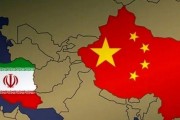
The fourth consequence is the further securitization of Iran’s geo-economics. Trump’s containment strategy, combined with damage to infrastructure and the portrayal of a “devastated” Iran by the Western media hegemony, has created difficult conditions for the recovery of Iran’s geo-economics position. This situation could affect Iran's most important lever in the future. At the same time, strategies such as expanding rail connectivity to China through Central Asia, rather than relying on maritime routes, could transform this threat into an opportunity and alter the situation in a different direction.
The fifth short-term consequence is the securitization of the northeastern borders and, more broadly, the shared security environment between Iran and Central Asia. In this regard, uncertainty in the surrounding environment, and contradictory assessments of threats, as well as weaknesses in defensive infrastructure along Iran’s northeastern borders constitute key factors.
Past behavior by the United States and the Zionist regime also suggests that the escalation of tensions from this direction, outside existing frameworks and through unilateral actions, cannot be ruled out.
Conclusion
Although major structural developments over recent years—including the emergence of a new generation of leaders, the Ukraine war and sanctions against Russia, intensified regional convergence and multilateralism, and the rise of the Taliban—formed the foundations of change in Central Asia and made it necessary for Iran to adapt to these evolving conditions, the Ramadan War has now emerged as an additional and decisive factor alongside all of these variables.
The behavioral responses of Central Asian countries are an important outcome of how developments have progressed over the past decade and the degree of interdependence and convergence between these states and Iran.
At the same time, the war has altered previous perceptions of Iran throughout Central Asia, as it has in other regions and at the global level. Consolidating this new position could generate substantial advantages for Iran. Under the difficult and tense circumstances prevailing in the south and west, Tehran should, in accordance with the vision of the Third Leader of the Revolution, Ayatollah Seyed Mojtaba Khamenei, devote special attention to the East and create the conditions for overcoming the “Middle East-centric” outlook of the past through a renewed focus on eastern opportunities.
Therefore, despite the threats mentioned above, the general assessment is that a great opportunity has emerged for Iran to reorganize its relations with the countries of Central Asia. So, by taking advantage of recent developments, Iran can act as an influential piece in the puzzle of regulating relations with the East.
[1] Dialectics generally means the critical examination of the correspondence of an opinion or idea to truth.
Omid Rahimi, Researcher at the Institute for East Strategic Studies (IESS). The U.S.–Zionist aggression against Iran or the “Ramadan War” was one of the most decisive developments for Iran since the Islamic Revolution. During this war (which has still not ended), the geopolitical foundations of Iran’s surrounding environment underwent profound transformation, and new behavioral trends and approaches came to dominate Iran’s geopolitical neighborhood. From this perspective and in accordance with ongoing developments, the dialectic of actions and reactions within geopolitical processes will eventually reach a new equilibrium that will determine the emerging order. In such a process, the manner in which states formulate their actions and recalibrate their reactions plays a significant role in shaping the new order.
Accordingly, this report seeks to analyze the behavior of Central Asian governments regarding the Ramadan War. This process includes evaluating their behavior, analyzing the factors and drivers behind their positions, assessing behavioral mechanisms, and examining short-term consequences.
Assessment of Behaviors
In Central Asia, the level of behavioral responses to the Ramadan War varied considerably. The closest and most convergent position toward Iran was adopted by Tajikistan. While condemning the aggression of the United States and the Zionist regime, Tajikistan did not declare solidarity with Arab countries. In addition, a public and official condolence message on the martyrdom of the Supreme Leader of Iran (with the precise mention of the word "martyrdom") was issued personally by President Emamali Rahmon.
The Tajik government also took a symbolic step by sending 110 trucks of humanitarian aid to Iran. The number 110 corresponding to the Abjad numerical value of the blessed name of Imam Ali (The First Leader of Shiites. (
The government of Uzbekistan, while refraining from condemning the aggression against Iran, issued a general condolence message to Iran’s President Pezeshkian regarding the martyrdom of the Supreme Leader. However, it used the term “passing away” rather than “martyrdom.” Uzbekistan also communicated with Arab countries such as Saudi Arabia and the UAE and expressed solidarity with them. Although it did not explicitly condemn Iran’s actions, it emphasized support for “territorial integrity.” Uzbekistan likewise sent a shipment consisting of several trucks of humanitarian aid to Iran.
Turkmenistan adopted a higher degree of neutrality. Without issuing any statement condemning the aggression, it merely sent a private condolence message through Gurbanguly Berdimuhamedov, the National Leader and Chairman of the People’s Council of Turkmenistan, regarding the martyrdom of the Supreme Leader of Iran. Although the message was officially delivered, it received no coverage in official Turkmen media and was only published by some unofficial websites and social media pages.
Turkmenistan neither condemned Iran’s attacks on U.S. bases in Arab countries nor demonstrated any particular solidarity with Arab states. It also sent four trucks of humanitarian assistance to Iran.
Kyrgyzstan demonstrated a lower level of impartiality and adopted a neutral stance. The Kyrgyz government did not react significantly to the outbreak of the war. Although a condolence message was issued by President Sadyr Japarov, it was not made public and was simply delivered to the Iranian embassy. The government expressed solidarity with some Arab countries, while simultaneously sending a 129-ton shipment of humanitarian aid to Iran.
Kazakhstan adopted the most divergent position toward Iran. In its first response to the war, the Kazakh government expressed solidarity with Arab countries and explicitly condemned Iran’s attacks on U.S. bases located in those states. Beyond this, President Tokayev made remarks concerning the position of the Iranian president and Iran’s power structure that could be regarded as interventionist.
In addition, Kazakhstan was the only Central Asian republic whose president did not issue a condolence message regarding the martyrdom of the Supreme Leader. Instead, it limited itself to a statement from the Ministry of Foreign Affairs. Kazakhstan was also the only Central Asian country that did not send any humanitarian aid to Iran.
Behavioral Drivers
The positions outlined above indicate that despite repeated references to “neutrality,” none of the Central Asian countries—except Tajikistan—maintained a purely neutral and balanced position regarding the Ramadan War. Four republics of the region displayed an exceptionally high degree of caution even in sending condolence messages regarding the martyrdom of the Supreme Leader, departing from established diplomatic protocols and norms of international conduct.
This occurred despite the fact that the leaders of these countries had previously issued condolence messages regarding the death of Iran’s President Raisi and even lower-profile incidents such as the explosion at Shahid Rajaee Port. In practice, the high-level interactions and consultations these countries maintained with the United States during the war indicate that their neutrality was not balanced, but rather aligned with the broader Western strategy toward Iran.
Several behavioral drivers can be identified to explain the emergence of this biased form of neutrality.
The first and most important driver is miscalculation. Due to their geographical distance from Iran, as well as inaccurate and unrealistic assessments of Iran’s offensive capabilities and resilience, these countries initially adopted positions that gradually weakened over time. This miscalculation had already been evident at a lower level during the Twelve-Day War, but unfortunately it was repeated in this conflict as well.
The second major driver is the lack of communication and cognitive channels connecting these countries with Iran and Tehran. The reality is that over the past decade, these states have gradually distanced themselves from Tehran, and their perceptions and understanding have consequently been affected.
Complementing this factor is a third variable based on mental stereotypes. In Central Asia, despite the relatively low level of institutionalization in foreign policymaking, subjective individual assessments continue to play an influential role. Within these perceptions, there has been little expectation that Iran would respond forcefully, act upon its threats, or demonstrate substantial offensive capabilities. In some cases, these stereotypes have even taken on “fantastical” dimensions regarding Iran’s power and position, helping to justify such policy choices.
Alongside these factors, a fourth consideration is the influence of Western and Zionist regime lobbying efforts. These countries were noticeably affected by the media environment created before the war. Moreover, during the critical initial phase of the aggression, they received information and developments concerning Iran primarily through official and unofficial channels associated with the West and the Zionist regime.
Finally, it is necessary to consider the behavioral outcomes of Iran’s own policies in recent years. The experience of these countries has demonstrated that even adopting unprincipled or anti-Iranian positions does not necessarily entail significant costs. By contrast, pursuing an “Iran-oriented” stance has proven relatively costly and may have tangible implications for their future interests. Consequently, based on a cost-benefit calculation, they have tended to adopt forms of positive neutrality that are broadly coordinated with the West and the Zionist regime.
Behavioral Mechanisms
During the course of the war, the governments of Central Asia displayed several behavioral patterns within different mechanisms that can be modeled through specific examples. The most important of these mechanisms are as follows:
1. The Investment Mechanism
One of the earliest manifestations of the region's purely pragmatic approach was investing in anticipated post-war benefits. Previous experience following the Zionist regime’s aggression against Qatar had reinforced this mechanism. Consequently, recognizing the capacity of Arab states to offer incentives, Iran’s limitations in imposing costs, and the political psychology of Trump, these countries adopted a strategy of investing in the post-war period regardless of the eventual outcome of the conflict.
2. The Compensation Mechanism
After moving beyond the initial phase and shock of the war, these countries quickly realized that the United States and the Zionist regime had failed to achieve their objectives and that these governments had made miscalculations regarding the results of the war. As a result, they adopted a compensation mechanism, primarily through the dispatch of humanitarian aid and the expression of solidarity with Iran at secondary levels of government, including ministers and other senior officials.
3. The Cost-Management Mechanism
It appears that, due to the limited effectiveness of the compensation mechanism, Central Asian states sought to manage potential costs through the exchange of messages and the presentation of initiatives that were widely understood from the outset to have little prospect of success. Examples of this behavioral mechanism can be observed in the transmission of certain messages, telephone conversations between foreign ministers, and especially mediation proposals such as the one put forward by Kazakhstan centered on the Turkestan region.
4. The Escalation-Prevention Mechanism
The scale of the Ramadan War initially differed significantly from that of the Twelve-Day War, and Trump’s inability to achieve his predetermined objectives intensified this situation. The escalation of tensions toward critical infrastructure, as well as discussions concerning potential threats emerging from Iran’s northern frontier as a means of further escalation, prompted these countries to engage in extensive and multilayered consultations with various actors in an effort to prevent the expansion of tensions toward the north and northeast.
The relatively distinct reactions to the Zionist regime’s attacks on targets in the Caspian Sea, as well as discussions surrounding an attack on Iran’s embassy in Lebanon and the official and unofficial responses from Central Asian states, can be viewed as indicators of this mechanism.
5. The Defensive Balancing Mechanism
Central Asian governments—particularly Turkmenistan and Kazakhstan, which perceived themselves as more vulnerable—adopted defensive balancing measures. These included raising the alert status of their armed forces and enhancing deterrence capabilities vis-à-vis Iran.
Specifically, reports indicated that prior to the war Turkmenistan strengthened its defense capabilities, electronic warfare, drone, and even air force capabilities along its border with Iran. In Kazakhstan, during the conflict, the readiness level of combat and air defense forces in the Caspian Sea was elevated under the direct supervision of the Kazakh Chief of the General Staff.
Iran’s retaliatory strikes against American companies operating in Arab Gulf states, and the presence of similar investments by such companies—including Chevron and ExxonMobil—in Kazakhstan, as well as reports regarding the sighting of an unidentified drone resembling Iranian Arash drones, and false-flag operations repeatedly conducted by the Zionist regime in Azerbaijan, Turkey, and several Arab countries were among the principal drivers behind this behavioral mechanism.
Short-Term Consequences
A combination of factors—including the initial positions adopted by Central Asian states, the drivers behind these behaviors (some of which remain unchanged), the new assessments that emerged regarding the war and especially the ceasefire in these countries, the growing divisions between the West and the Zionist regime concerning Iran, the global consequences of the war imposed by Iran, and the inconsistent behavioral mechanisms displayed by these countries—may generate a number of short-term consequences.
Together with Iran’s own responses, these consequences will play an important role in consolidating the emerging regional order. The most significant short-term consequences are as follows:
The first and most important consequence is growing uncertainty among Central Asian states regarding the viability of neutrality and multi-vector foreign policy. These countries are increasingly concluding that such policies provide positive security, political, and economic benefits only in the absence of major crises, and that in times of escalating tensions, they may be compelled to adjust or even abandon their neutrality.
The second consequence is the initial change in assessments regarding Iran's behavioral logic. Through the Ramadan War, Tehran demonstrated that it has evolved into a pragmatic actor possessing both substantial global influence and significant resilience. It also demonstrated a considerable capacity for the controlled escalation of tensions across multiple arenas. Nevertheless, this behavioral model has not yet been implemented directly toward Central Asia, and the manner in which it becomes institutionalized will be highly consequential.
The third consequence is the emergence of a rift and, correspondingly, an uncertainty in Iran’s relations with certain countries in the region. This is particularly evident in the cases of Turkmenistan and Kazakhstan.
Regarding Turkmenistan, perceptions of potential threats and the inability to definitively “dismiss” such concerns due to insufficient access to relevant information have created serious uncertainty about the security situation along Iran’s northeastern frontier. In the case of Kazakhstan, the continuation of a trajectory of divergence from Iran—through strengthened relations with the Zionist regime, Arab states, and the West, alongside adherence to its initial positions—deserves particular attention.
The fourth consequence is the further securitization of Iran’s geo-economics. Trump’s containment strategy, combined with damage to infrastructure and the portrayal of a “devastated” Iran by the Western media hegemony, has created difficult conditions for the recovery of Iran’s geo-economics position. This situation could affect Iran's most important lever in the future. At the same time, strategies such as expanding rail connectivity to China through Central Asia, rather than relying on maritime routes, could transform this threat into an opportunity and alter the situation in a different direction.
The fifth short-term consequence is the securitization of the northeastern borders and, more broadly, the shared security environment between Iran and Central Asia. In this regard, uncertainty in the surrounding environment, and contradictory assessments of threats, as well as weaknesses in defensive infrastructure along Iran’s northeastern borders constitute key factors.
Past behavior by the United States and the Zionist regime also suggests that the escalation of tensions from this direction, outside existing frameworks and through unilateral actions, cannot be ruled out.
Conclusion
Although major structural developments over recent years—including the emergence of a new generation of leaders, the Ukraine war and sanctions against Russia, intensified regional convergence and multilateralism, and the rise of the Taliban—formed the foundations of change in Central Asia and made it necessary for Iran to adapt to these evolving conditions, the Ramadan War has now emerged as an additional and decisive factor alongside all of these variables.
The behavioral responses of Central Asian countries are an important outcome of how developments have progressed over the past decade and the degree of interdependence and convergence between these states and Iran.
At the same time, the war has altered previous perceptions of Iran throughout Central Asia, as it has in other regions and at the global level. Consolidating this new position could generate substantial advantages for Iran. Under the difficult and tense circumstances prevailing in the south and west, Tehran should, in accordance with the vision of the Third Leader of the Revolution, Ayatollah Seyed Mojtaba Khamenei, devote special attention to the East and create the conditions for overcoming the “Middle East-centric” outlook of the past through a renewed focus on eastern opportunities.
Therefore, despite the threats mentioned above, the general assessment is that a great opportunity has emerged for Iran to reorganize its relations with the countries of Central Asia. So, by taking advantage of recent developments, Iran can act as an influential piece in the puzzle of regulating relations with the East.
[1] Dialectics generally means the critical examination of the correspondence of an opinion or idea to truth.
News code:4299
Author : Omid Rahimi Researcher at the Institute for East Strategic Studies (IESS)
Source : East Studies