
15 Sep 2026
Publish Date
Thursday 11 June 2026 - 12:14


recommended
0
A look at the impact of the US and Zionist aggression against Iran on Afghanistan
The U.S. and Zionist Regime’s War Against Iran: Effects on Afghanistan
Beyond a military confrontation, the Ramadan War has led to the creation of a new discursive space in Afghanistan; a space in which the "narrative of resistance" as a unifying factor has been able to create a new discursive space in the field of political alignment.
By: Mir Ahmad Mashal
Introduction
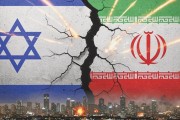
The military aggression of the United States and the Zionist regime against Iran is one of the fundamental developments that has changed the security, political, and economic order of West Asia. In this context, Afghanistan, as Iran’s eastern neighbor, is considered one of the first and most sensitive countries affected by this conflict for several reasons, including geographical proximity, cultural and religious commonalities, economic dependence on Iranian ports, transit routes and goods, as well as the presence of millions of Afghan migrants on Iranian soil.
The question is: what political, social, and economic effects has this war left on Afghanistan?
In response, it appears that the effects of the war on Afghanistan should not be analyzed through a uniform and one-dimensional lens, but rather within the framework of a set of sometimes contradictory and multilayered consequences; ranging from the unprecedented political alignment of the Taliban government with Iran and the redefinition of Tehran’s soft power in Afghan public opinion, to serious disruptions in the supply chain of essential goods and the imposition of livelihood pressures on ordinary people.
This article will examine the various dimensions of these effects in three areas: political, social, and economic.
Political Effects
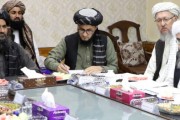
Before the outbreak of the war, Zabihullah Mujahid, spokesperson for the Taliban government, had said that “In the event of a United States attack on Iran, Afghanistan will support Iran to the extent of its capabilities.” This stance demonstrates an unprecedented level of open alignment between the Taliban government and Tehran.
Based on such a position, it can be said that the Taliban government is among the few governments that explicitly and openly sided with Iran. Moreover, in its official statements, the Taliban emphasized “Iran’s legitimate right to self-defense” and identified the United States as the aggressor party; a matter that reflects the strengthening of a specific political orientation in the official discourse of the Islamic Emirate.
Such explicit political and symbolic support by the Taliban government for Iran during the U.S.–Zionist regime war against the country can be assessed as a highly powerful “political signal/message” serving several simultaneous functions.
First, at the symbolic level, this position indicates that the Taliban government is prepared to move beyond a purely domestic framework and define itself as a position-taking actor in regional equations. This issue is highly significant for Tehran because, from the perspective of the Islamic Republic of Iran, such alignment—even if merely declaratory—is regarded as a sign of strengthening Kabul’s political alliance with Tehran.
Second, this support can contribute to strengthening the “initial capital of trust” between the two sides. Every public stance during sensitive turning points is considered a practical test. Through such a position, the Taliban conveys the message that, on certain major strategic lines, it can act in coordination with Iran. The outcome of this sensitive stance is that Iran may enter into strategic engagement with the Taliban government in future interactions.
Third, this alignment may have practical implications in other areas; if Tehran evaluates this support as credible and reliable, such evaluation could increase Tehran’s inclination toward fundamental cooperation with the Taliban government in economic and security fields.
The Influence of Iran’s “Soft Power” Through the Creation of a Shared Discursive Space in Afghanistan
Political Sphere
Beyond the direct impact of the U.S.–Zionist regime war against Iran on Afghanistan—which has been primarily associated with positive political activism on the part of the Taliban government—this war has also produced significant consequences at the level of soft power, affecting the attitudes and perceptions of both the Taliban government and Afghan society in general.
Although Iran, due to its political and cultural capabilities and historical standing, has long exercised considerable influence over Afghan society, the U.S.–Zionist regime war against Iran has led to an unprecedented increase in Iran’s soft power.
Iran’s unexpected resistance against the extensive and unprecedented two-front aggression of the United States and the Zionist regime has profoundly redefined Iran’s power and played a major role in political alignments, social attitudes, and public perceptions within Afghan society regarding Iran.
One of the most prominent manifestations of this influence can be observed in the political behavior and discourse of the Taliban. Despite the fact that a segment of Taliban members, due to ideological, religious, and historical differences, had not held favorable views toward Iran, the U.S.–Zionist regime war against Iran has prompted a kind of reassessment of their beliefs and attitudes.
Beyond the earlier remarks of Zabihullah Mujahid, the relatively sympathetic positions expressed by certain Taliban officials during the war with Iran in the media and on social platforms—regardless of political calculations, regional pressures, or diplomatic opportunism—at a deeper level reflect the influence of Iran’s “resistance” narrative.
In this war, the Islamic Republic of Iran presented itself as an actor standing against aggressive major powers. This image has generated a particular ideological appeal for the Taliban, who define their identity on the basis of resistance and opposition to foreign intervention. On the other hand, Iran’s resistance against the extensive regime-change-oriented aggression of the United States and the Zionist regime has completely transformed Iran’s standing in the perceptions and views of the Taliban.
In the past, based on media propaganda, the prevailing perception among segments of the Taliban was that Iran was an ordinary country similar to other Middle Eastern states. The fact that the United States had been able to completely overthrow Iraq government within a matter of weeks had also created a somewhat similar assumption regarding Iran within Taliban thinking. However, Iran’s intense resistance—and even its ability to inflict crushing counterblows on the enemy despite the elimination and martyrdom of its top-level leaders and first-rank military commanders—has elevated Iran’s status in the Taliban mindset to that of a highly powerful, capable, and resilient state able to endure under extremely difficult conditions.
At a broader level, such discursive convergence can strengthen the grounds for political convergence on several levels:
First, at the level of political legitimization, the Taliban can use the current discursive environment to justify its internal body. Some Taliban leaders previously defined Iran primarily through the framework of sectarian differences, but now they can redefine relations with Iran for their body as an engagement with a “resistant actor against foreign domination.” Conversely, Iran can also portray engagement with the Taliban not merely as a dealing with an ideological group, but as part of a regional order opposed to American influence.
Second, at the level of institution-building and official interactions, this discursive convergence opens space for expanding channels of communication. When two actors move closer at the level of narrative, resolving issues between them also becomes easier on that basis. In fact, the currently emerging discursive environment can play the role of a “political lubricant,” reducing friction in official interactions.
Third, in the security-strategic dimension, a shared definition of threats can lead to practical convergence. If both the Taliban and Iran regard the presence or influence of the United States and its allies as a threat, this common understanding may extend into cooperation in other areas.
Fourth, in the economic sphere, discursive convergence can also pave the way forward. When ideological distrust decreases, the implementation of economic projects—from trade to transit, and from energy cooperation to strengthening shared infrastructure—becomes easier. For the Taliban, Iran represents a vital route to open waters and a potential partner under sanctions conditions, and these interests may transform discursive convergence into tangible cooperation.
Social Sphere
In the social sphere, the U.S.–Zionist regime war against Iran has left significant effects on Afghan public opinion. This influence must be analyzed in connection with historical-cultural backgrounds and new political developments, rather than merely as an emotional reaction to an external event. Historically, a large portion of Afghan society, due to cultural and religious commonalities, has felt a sense of familiarity and cultural closeness toward Iran. This soft foundation had already provided fertile ground for the acceptance of positive narratives.
However, what became prominent as a result of the recent confrontation was a transformation in the “perception of power.” In this confrontation, Iran appeared in the eyes of the Afghan people as an actor capable of standing up to major powers. In societies with long experiences of foreign intervention, such an image quickly turns into a symbolic capital.
This shift in perception is also largely the product of media representation and social networks. Narratives emphasizing Iran’s “resistance,” “resilience,” and “self-reliance” gain appeal among audiences weary of instability and dependence. Consequently, Iran has been redefined in the minds of social groups not merely as a cultural neighbor, but as a “model of regional power.”
Another important issue that has greatly influenced both the Taliban government and the people of Afghanistan—and is considered one of the key factors behind political convergence and public sympathy toward Iran in Afghanistan—is the prominence of the discourse of “defending Quds” and supporting the Palestinian cause. This discourse, which has long played a central role in Iran’s foreign policy, became even more prominent in the context of the war with the United States and the Zionist regime and evolved into a political-identity element.
For Afghan society, and for the Taliban as part of this society, the Palestinian issue is not merely a distant political matter; rather, it is connected with religious and emotional concepts such as “protecting holy sites” and “defending Muslims.”
Within such a framework, Iran’s narrative of itself as the defender of Quds and supporter of movements such as Hamas has succeeded in generating a kind of social sympathy toward Iran in Afghanistan. In this context, the image of “steadfastness” carries key importance. Iran’s defense of Quds and the Palestinian Muslims against the crimes of the United States and the Zionist regime—which was certainly one of the principal reasons behind the aggression of the United States and the Zionist regime against Iran—has caused this defense to become aligned in the minds of the Afghan people with values such as resistance, religious honor, and defending the oppressed. As a result, Iran is represented not merely as a country, but as “the symbol of a front”; a front that defends holy sites and Islamic ideals. This representation has been able to create a kind of emotional alignment and even symbolic pride among the people of Afghanistan toward Iran.
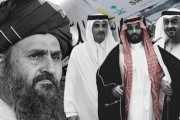
Alongside the discursive and media impacts, public opinion in Afghanistan has entered into a kind of “perceptual comparison” between Iran and certain Arab countries. Within this framework, Iran—as an actor that has stood against the United States and the Zionist regime—is contrasted with countries that, in the minds of these audiences, are regarded as aligned with or close to the United States and even the Zionist regime. This dichotomy — “resistance” versus “alignment”— plays an important role in shaping mental preferences.
For Afghan society, which carries the historical experience of foreign intervention within its collective memory, values such as independence, steadfastness, and non-dependence hold significant importance. In such a context, Iran emerges as the symbol of these characteristics, while certain Arab countries—especially those that, during the Ramadan War, facilitated the U.S. aggression against Iran—are placed, in this perceptual comparison, in the inferior position of being tools in the hands of others. This process is especially reinforced when the Palestinian issue also enters the equation. Iran’s support for the Palestinian cause, alongside perceptions of the normalization of relations between some Arab countries and the Zionist regime, intensifies this dichotomy in public opinion. As a result, a kind of symbolic preference in favor of Iran over Arab countries has taken shape in Afghan public opinion.
Another issue around which Afghan public opinion has revolved in the context of the U.S. and Zionist regime’s war against Iran, is the issue of confrontation between unbelief and Islam. This narrative has become so prominent that even among groups that previously held negative views toward Shi’ism or Iran’s policies, it has led to a kind of redefinition of perspectives. In other words, sectarian divisions, at least at the discursive level, have to some extent been pushed to the margins and replaced by a broader binary—that of Islam versus unbelief. Within this framework, Iran has been represented not merely as a Shi’a state, but as an actor standing on the front line in defense of Islam within this confrontation.
This representation has several consequences. First, it creates a kind of trans-sectarian emotional solidarity among the people of Afghanistan toward Iran; meaning that individuals who under normal circumstances held critical positions toward Iran or Shi’ism, now feel that they are facing a “larger issue.” Second, it elevates Iran’s symbolic position as a “fortress of Islamic defense,” and third, it strengthens acceptance of the narratives of resistance and steadfastness, which had already been rooted in Afghanistan’s political culture.
Economic Sphere
Afghanistan is a country with distinctive and to some extent contradictory economic characteristics. On the one hand, the country is heavily dependent on external resources in most economic sectors, to the extent that even a limited disruption in the regional supply chain can produce significant and at times destructive consequences for its economy. On the other hand, due to access to diverse routes and partners, Afghanistan benefits from a degree of relative diversity in supply sources; a factor that prevents disruption in one source from necessarily leading to a widespread and fatal crisis.
Moreover, the nature of Afghanistan’s economy—which is partly based on domestic production and patterns of consumption adapted to limitations—alongside the society’s historical experience in dealing with shortages, has created a kind of “economic resilience.” Although this resilience does not mean a complete immunity, it has to some extent increased the ability to adapt to external shocks. Nevertheless, Afghanistan’s geopolitical position and its location within a highly tense environment mean that developments in its surrounding region, especially in neighboring countries, exert direct and indirect effects on the country’s economy. Within this framework, the outbreak of war in Iran, as one of Afghanistan’s major economic partners, imposed a set of simultaneous positive and negative consequences on Afghanistan’s economy.
Positive Effects
In the economic sphere, the U.S.–Zionist regime war against Iran has had both strengthening and disruptive effects for Afghanistan. On the one hand, Iran’s reduced access to distant markets pushed the country toward nearby markets, including Afghanistan, thereby increasing Iran’s share in meeting Afghanistan’s needs, especially in energy products and certain consumer goods.
According to reports from the Afghanistan Chamber of Commerce and Investment, the volume of trade between the two countries during the current year increased by 30 to 35 percent compared to the previous year, rising from approximately $3 billion to more than $4 billion. According to statements by officials at the Islam Qala customs office, around 1,300 cargo trucks cross the shared borders daily, and the movement of commercial goods did not stop even at the height of the conflict.
The Khaf–Herat railway, carrying approximately 95,000 tons of goods monthly, has also become a vital artery of commercial exchange. Meanwhile, primary and essential resources such as gasoline, diesel, and LPG have continued to be supplied steadily and uninterruptedly through Iran. Even at the peak of the war, it was reported that more than one-third to nearly half of Afghanistan’s fuel imports were supplied by Iran, and despite fluctuations in global fuel supply and rising international prices, fuel supply and prices in Afghanistan did not face widespread disruption, and Afghanistan’s domestic market remained protected from severe shortage shocks.
Negative Effects
The U.S.–Zionist regime war against Iran also imposed profound and multilayered negative effects on Afghanistan’s economy. First and most importantly, serious disruptions occurred in Iranian ports, including Chabahar Port, which in recent months had become a vital trade corridor for Afghanistan due to the closure of Afghanistan’s border with Pakistan.
Reports indicate that as the war intensified, ships carrying Afghan goods remained stranded in these ports, and unloading and loading processes faced serious disruption. The direct result of this disruption was a sharp rise in the prices of imported goods in Afghan markets, to the extent that the prices of some imported food products, construction materials, electronic goods, automobile parts, and other machinery entering Afghanistan from the south increased dramatically.
Afghanistan also experienced shortages and price increases in the supply of some food items. Since the Iranian government showed greater inclination during the war toward managing the export of essential goods (such as oil, sugar, certain agricultural products, medicines, and medical equipment), the Afghan market encountered temporary shortages and price increases. Field reports indicate that the prices of some food items imported from Iran increased in Afghanistan by around 10 to 30 percent and became volatile in certain border provinces. For example, the prices of potatoes and tomatoes doubled in Afghan markets within 40 days.
In the area of medical equipment and pharmaceuticals, Afghanistan also faced supply shortages and rising prices due to its dependence on Iranian and Indian products. Another important issue was the sharp decline in remittances sent from Iran due to disruptions in Iran’s internet and telecommunications systems. This had highly negative effects on meeting the needs of segments of the Afghan population whose relatives work in Iran and provide financial support.
Conclusion
In conclusion, it can be said that the Ramadan War, beyond being merely a military confrontation, has led to the creation of a new discursive environment in Afghanistan; a space in which the “narrative of resistance,” as a connecting factor, has succeeded in generating a new discourse for political alignment.
An important point is that the Taliban, as the principal actor of power in Afghanistan, under the influence of this discursive redefinition, is moving from a merely cautious position toward a kind of engagement based on strategic alignment. In Afghanistan’s social sphere, this war has functioned more as a “perceptual intensifier” than as a sudden and fundamental transformation.
These developments have connected previous contexts —including cultural and religious closeness—with the elements of “power,” “resistance,” and “the fortress of defense of Islam,” and as a result, they have elevated Iran’s image in the minds of part of Afghan public opinion from that of a cultural neighbor to that of a resistant actor and symbolic model.
The economic consequences of the U.S.–Zionist regime war against Iran for Afghanistan have possessed a dual and unbalanced nature. On the one hand, these developments strengthened Afghanistan’s trade ties with Iran, especially in vital sectors such as energy, and to some extent prevented severe shocks in areas such as fuel supply. This demonstrates that under crisis conditions, geographical proximity and mutual dependence can function as stabilizing factors.
On the other hand, this very dependence and concentration on specific routes also revealed the structural vulnerability of Afghanistan’s economy. Disruptions in Iran’s southern ports, restrictions on the export of certain essential goods, rising transit costs, and reduced remittance flows all demonstrated how sensitive Afghanistan’s economy remains to external shocks.
Rising prices, temporary shortages, and pressure on people’s livelihoods have been tangible manifestations of this vulnerability. Consequently, what emerges from these developments is not merely the strengthening or weakening of Afghanistan’s economy, but rather the highlighting of a key reality: that despite possessing capacities for relative resilience and adaptation, the country’s economy remains highly dependent on and affected by fluctuations in the regional environment.
Mir Ahmad Mashal; Expert on Afghan AffairsThe military aggression of the United States and the Zionist regime against Iran is one of the fundamental developments that has changed the security, political, and economic order of West Asia. In this context, Afghanistan, as Iran’s eastern neighbor, is considered one of the first and most sensitive countries affected by this conflict for several reasons, including geographical proximity, cultural and religious commonalities, economic dependence on Iranian ports, transit routes and goods, as well as the presence of millions of Afghan migrants on Iranian soil.
The question is: what political, social, and economic effects has this war left on Afghanistan?
In response, it appears that the effects of the war on Afghanistan should not be analyzed through a uniform and one-dimensional lens, but rather within the framework of a set of sometimes contradictory and multilayered consequences; ranging from the unprecedented political alignment of the Taliban government with Iran and the redefinition of Tehran’s soft power in Afghan public opinion, to serious disruptions in the supply chain of essential goods and the imposition of livelihood pressures on ordinary people.
This article will examine the various dimensions of these effects in three areas: political, social, and economic.
Political Effects
Before the outbreak of the war, Zabihullah Mujahid, spokesperson for the Taliban government, had said that “In the event of a United States attack on Iran, Afghanistan will support Iran to the extent of its capabilities.” This stance demonstrates an unprecedented level of open alignment between the Taliban government and Tehran.
Based on such a position, it can be said that the Taliban government is among the few governments that explicitly and openly sided with Iran. Moreover, in its official statements, the Taliban emphasized “Iran’s legitimate right to self-defense” and identified the United States as the aggressor party; a matter that reflects the strengthening of a specific political orientation in the official discourse of the Islamic Emirate.
Such explicit political and symbolic support by the Taliban government for Iran during the U.S.–Zionist regime war against the country can be assessed as a highly powerful “political signal/message” serving several simultaneous functions.
First, at the symbolic level, this position indicates that the Taliban government is prepared to move beyond a purely domestic framework and define itself as a position-taking actor in regional equations. This issue is highly significant for Tehran because, from the perspective of the Islamic Republic of Iran, such alignment—even if merely declaratory—is regarded as a sign of strengthening Kabul’s political alliance with Tehran.
Second, this support can contribute to strengthening the “initial capital of trust” between the two sides. Every public stance during sensitive turning points is considered a practical test. Through such a position, the Taliban conveys the message that, on certain major strategic lines, it can act in coordination with Iran. The outcome of this sensitive stance is that Iran may enter into strategic engagement with the Taliban government in future interactions.
Third, this alignment may have practical implications in other areas; if Tehran evaluates this support as credible and reliable, such evaluation could increase Tehran’s inclination toward fundamental cooperation with the Taliban government in economic and security fields.
The Influence of Iran’s “Soft Power” Through the Creation of a Shared Discursive Space in Afghanistan
Political Sphere
Beyond the direct impact of the U.S.–Zionist regime war against Iran on Afghanistan—which has been primarily associated with positive political activism on the part of the Taliban government—this war has also produced significant consequences at the level of soft power, affecting the attitudes and perceptions of both the Taliban government and Afghan society in general.
Although Iran, due to its political and cultural capabilities and historical standing, has long exercised considerable influence over Afghan society, the U.S.–Zionist regime war against Iran has led to an unprecedented increase in Iran’s soft power.
Iran’s unexpected resistance against the extensive and unprecedented two-front aggression of the United States and the Zionist regime has profoundly redefined Iran’s power and played a major role in political alignments, social attitudes, and public perceptions within Afghan society regarding Iran.
One of the most prominent manifestations of this influence can be observed in the political behavior and discourse of the Taliban. Despite the fact that a segment of Taliban members, due to ideological, religious, and historical differences, had not held favorable views toward Iran, the U.S.–Zionist regime war against Iran has prompted a kind of reassessment of their beliefs and attitudes.
Beyond the earlier remarks of Zabihullah Mujahid, the relatively sympathetic positions expressed by certain Taliban officials during the war with Iran in the media and on social platforms—regardless of political calculations, regional pressures, or diplomatic opportunism—at a deeper level reflect the influence of Iran’s “resistance” narrative.
In this war, the Islamic Republic of Iran presented itself as an actor standing against aggressive major powers. This image has generated a particular ideological appeal for the Taliban, who define their identity on the basis of resistance and opposition to foreign intervention. On the other hand, Iran’s resistance against the extensive regime-change-oriented aggression of the United States and the Zionist regime has completely transformed Iran’s standing in the perceptions and views of the Taliban.
In the past, based on media propaganda, the prevailing perception among segments of the Taliban was that Iran was an ordinary country similar to other Middle Eastern states. The fact that the United States had been able to completely overthrow Iraq government within a matter of weeks had also created a somewhat similar assumption regarding Iran within Taliban thinking. However, Iran’s intense resistance—and even its ability to inflict crushing counterblows on the enemy despite the elimination and martyrdom of its top-level leaders and first-rank military commanders—has elevated Iran’s status in the Taliban mindset to that of a highly powerful, capable, and resilient state able to endure under extremely difficult conditions.
At a broader level, such discursive convergence can strengthen the grounds for political convergence on several levels:
First, at the level of political legitimization, the Taliban can use the current discursive environment to justify its internal body. Some Taliban leaders previously defined Iran primarily through the framework of sectarian differences, but now they can redefine relations with Iran for their body as an engagement with a “resistant actor against foreign domination.” Conversely, Iran can also portray engagement with the Taliban not merely as a dealing with an ideological group, but as part of a regional order opposed to American influence.
Second, at the level of institution-building and official interactions, this discursive convergence opens space for expanding channels of communication. When two actors move closer at the level of narrative, resolving issues between them also becomes easier on that basis. In fact, the currently emerging discursive environment can play the role of a “political lubricant,” reducing friction in official interactions.
Third, in the security-strategic dimension, a shared definition of threats can lead to practical convergence. If both the Taliban and Iran regard the presence or influence of the United States and its allies as a threat, this common understanding may extend into cooperation in other areas.
Fourth, in the economic sphere, discursive convergence can also pave the way forward. When ideological distrust decreases, the implementation of economic projects—from trade to transit, and from energy cooperation to strengthening shared infrastructure—becomes easier. For the Taliban, Iran represents a vital route to open waters and a potential partner under sanctions conditions, and these interests may transform discursive convergence into tangible cooperation.
Social Sphere
In the social sphere, the U.S.–Zionist regime war against Iran has left significant effects on Afghan public opinion. This influence must be analyzed in connection with historical-cultural backgrounds and new political developments, rather than merely as an emotional reaction to an external event. Historically, a large portion of Afghan society, due to cultural and religious commonalities, has felt a sense of familiarity and cultural closeness toward Iran. This soft foundation had already provided fertile ground for the acceptance of positive narratives.
However, what became prominent as a result of the recent confrontation was a transformation in the “perception of power.” In this confrontation, Iran appeared in the eyes of the Afghan people as an actor capable of standing up to major powers. In societies with long experiences of foreign intervention, such an image quickly turns into a symbolic capital.
This shift in perception is also largely the product of media representation and social networks. Narratives emphasizing Iran’s “resistance,” “resilience,” and “self-reliance” gain appeal among audiences weary of instability and dependence. Consequently, Iran has been redefined in the minds of social groups not merely as a cultural neighbor, but as a “model of regional power.”
Another important issue that has greatly influenced both the Taliban government and the people of Afghanistan—and is considered one of the key factors behind political convergence and public sympathy toward Iran in Afghanistan—is the prominence of the discourse of “defending Quds” and supporting the Palestinian cause. This discourse, which has long played a central role in Iran’s foreign policy, became even more prominent in the context of the war with the United States and the Zionist regime and evolved into a political-identity element.
For Afghan society, and for the Taliban as part of this society, the Palestinian issue is not merely a distant political matter; rather, it is connected with religious and emotional concepts such as “protecting holy sites” and “defending Muslims.”
Within such a framework, Iran’s narrative of itself as the defender of Quds and supporter of movements such as Hamas has succeeded in generating a kind of social sympathy toward Iran in Afghanistan. In this context, the image of “steadfastness” carries key importance. Iran’s defense of Quds and the Palestinian Muslims against the crimes of the United States and the Zionist regime—which was certainly one of the principal reasons behind the aggression of the United States and the Zionist regime against Iran—has caused this defense to become aligned in the minds of the Afghan people with values such as resistance, religious honor, and defending the oppressed. As a result, Iran is represented not merely as a country, but as “the symbol of a front”; a front that defends holy sites and Islamic ideals. This representation has been able to create a kind of emotional alignment and even symbolic pride among the people of Afghanistan toward Iran.
Alongside the discursive and media impacts, public opinion in Afghanistan has entered into a kind of “perceptual comparison” between Iran and certain Arab countries. Within this framework, Iran—as an actor that has stood against the United States and the Zionist regime—is contrasted with countries that, in the minds of these audiences, are regarded as aligned with or close to the United States and even the Zionist regime. This dichotomy — “resistance” versus “alignment”— plays an important role in shaping mental preferences.
For Afghan society, which carries the historical experience of foreign intervention within its collective memory, values such as independence, steadfastness, and non-dependence hold significant importance. In such a context, Iran emerges as the symbol of these characteristics, while certain Arab countries—especially those that, during the Ramadan War, facilitated the U.S. aggression against Iran—are placed, in this perceptual comparison, in the inferior position of being tools in the hands of others. This process is especially reinforced when the Palestinian issue also enters the equation. Iran’s support for the Palestinian cause, alongside perceptions of the normalization of relations between some Arab countries and the Zionist regime, intensifies this dichotomy in public opinion. As a result, a kind of symbolic preference in favor of Iran over Arab countries has taken shape in Afghan public opinion.
Another issue around which Afghan public opinion has revolved in the context of the U.S. and Zionist regime’s war against Iran, is the issue of confrontation between unbelief and Islam. This narrative has become so prominent that even among groups that previously held negative views toward Shi’ism or Iran’s policies, it has led to a kind of redefinition of perspectives. In other words, sectarian divisions, at least at the discursive level, have to some extent been pushed to the margins and replaced by a broader binary—that of Islam versus unbelief. Within this framework, Iran has been represented not merely as a Shi’a state, but as an actor standing on the front line in defense of Islam within this confrontation.
This representation has several consequences. First, it creates a kind of trans-sectarian emotional solidarity among the people of Afghanistan toward Iran; meaning that individuals who under normal circumstances held critical positions toward Iran or Shi’ism, now feel that they are facing a “larger issue.” Second, it elevates Iran’s symbolic position as a “fortress of Islamic defense,” and third, it strengthens acceptance of the narratives of resistance and steadfastness, which had already been rooted in Afghanistan’s political culture.
Economic Sphere
Afghanistan is a country with distinctive and to some extent contradictory economic characteristics. On the one hand, the country is heavily dependent on external resources in most economic sectors, to the extent that even a limited disruption in the regional supply chain can produce significant and at times destructive consequences for its economy. On the other hand, due to access to diverse routes and partners, Afghanistan benefits from a degree of relative diversity in supply sources; a factor that prevents disruption in one source from necessarily leading to a widespread and fatal crisis.
Moreover, the nature of Afghanistan’s economy—which is partly based on domestic production and patterns of consumption adapted to limitations—alongside the society’s historical experience in dealing with shortages, has created a kind of “economic resilience.” Although this resilience does not mean a complete immunity, it has to some extent increased the ability to adapt to external shocks. Nevertheless, Afghanistan’s geopolitical position and its location within a highly tense environment mean that developments in its surrounding region, especially in neighboring countries, exert direct and indirect effects on the country’s economy. Within this framework, the outbreak of war in Iran, as one of Afghanistan’s major economic partners, imposed a set of simultaneous positive and negative consequences on Afghanistan’s economy.
Positive Effects
In the economic sphere, the U.S.–Zionist regime war against Iran has had both strengthening and disruptive effects for Afghanistan. On the one hand, Iran’s reduced access to distant markets pushed the country toward nearby markets, including Afghanistan, thereby increasing Iran’s share in meeting Afghanistan’s needs, especially in energy products and certain consumer goods.
According to reports from the Afghanistan Chamber of Commerce and Investment, the volume of trade between the two countries during the current year increased by 30 to 35 percent compared to the previous year, rising from approximately $3 billion to more than $4 billion. According to statements by officials at the Islam Qala customs office, around 1,300 cargo trucks cross the shared borders daily, and the movement of commercial goods did not stop even at the height of the conflict.
The Khaf–Herat railway, carrying approximately 95,000 tons of goods monthly, has also become a vital artery of commercial exchange. Meanwhile, primary and essential resources such as gasoline, diesel, and LPG have continued to be supplied steadily and uninterruptedly through Iran. Even at the peak of the war, it was reported that more than one-third to nearly half of Afghanistan’s fuel imports were supplied by Iran, and despite fluctuations in global fuel supply and rising international prices, fuel supply and prices in Afghanistan did not face widespread disruption, and Afghanistan’s domestic market remained protected from severe shortage shocks.
Negative Effects
The U.S.–Zionist regime war against Iran also imposed profound and multilayered negative effects on Afghanistan’s economy. First and most importantly, serious disruptions occurred in Iranian ports, including Chabahar Port, which in recent months had become a vital trade corridor for Afghanistan due to the closure of Afghanistan’s border with Pakistan.
Reports indicate that as the war intensified, ships carrying Afghan goods remained stranded in these ports, and unloading and loading processes faced serious disruption. The direct result of this disruption was a sharp rise in the prices of imported goods in Afghan markets, to the extent that the prices of some imported food products, construction materials, electronic goods, automobile parts, and other machinery entering Afghanistan from the south increased dramatically.
Afghanistan also experienced shortages and price increases in the supply of some food items. Since the Iranian government showed greater inclination during the war toward managing the export of essential goods (such as oil, sugar, certain agricultural products, medicines, and medical equipment), the Afghan market encountered temporary shortages and price increases. Field reports indicate that the prices of some food items imported from Iran increased in Afghanistan by around 10 to 30 percent and became volatile in certain border provinces. For example, the prices of potatoes and tomatoes doubled in Afghan markets within 40 days.
In the area of medical equipment and pharmaceuticals, Afghanistan also faced supply shortages and rising prices due to its dependence on Iranian and Indian products. Another important issue was the sharp decline in remittances sent from Iran due to disruptions in Iran’s internet and telecommunications systems. This had highly negative effects on meeting the needs of segments of the Afghan population whose relatives work in Iran and provide financial support.
Conclusion
In conclusion, it can be said that the Ramadan War, beyond being merely a military confrontation, has led to the creation of a new discursive environment in Afghanistan; a space in which the “narrative of resistance,” as a connecting factor, has succeeded in generating a new discourse for political alignment.
An important point is that the Taliban, as the principal actor of power in Afghanistan, under the influence of this discursive redefinition, is moving from a merely cautious position toward a kind of engagement based on strategic alignment. In Afghanistan’s social sphere, this war has functioned more as a “perceptual intensifier” than as a sudden and fundamental transformation.
These developments have connected previous contexts —including cultural and religious closeness—with the elements of “power,” “resistance,” and “the fortress of defense of Islam,” and as a result, they have elevated Iran’s image in the minds of part of Afghan public opinion from that of a cultural neighbor to that of a resistant actor and symbolic model.
The economic consequences of the U.S.–Zionist regime war against Iran for Afghanistan have possessed a dual and unbalanced nature. On the one hand, these developments strengthened Afghanistan’s trade ties with Iran, especially in vital sectors such as energy, and to some extent prevented severe shocks in areas such as fuel supply. This demonstrates that under crisis conditions, geographical proximity and mutual dependence can function as stabilizing factors.
On the other hand, this very dependence and concentration on specific routes also revealed the structural vulnerability of Afghanistan’s economy. Disruptions in Iran’s southern ports, restrictions on the export of certain essential goods, rising transit costs, and reduced remittance flows all demonstrated how sensitive Afghanistan’s economy remains to external shocks.
Rising prices, temporary shortages, and pressure on people’s livelihoods have been tangible manifestations of this vulnerability. Consequently, what emerges from these developments is not merely the strengthening or weakening of Afghanistan’s economy, but rather the highlighting of a key reality: that despite possessing capacities for relative resilience and adaptation, the country’s economy remains highly dependent on and affected by fluctuations in the regional environment.
News code:4301